
Last updated: October 3, 2026
Last updated: September 2, 2026.
The right food movie depends less on cuisine than on what you want the kitchen to do tonight. It can calm you down, make you hungry, turn craft into drama, or weaponize a tasting menu. This guide matches eight narrative films to those different jobs. If you want reporting, real chefs, or food systems instead, go directly to our food documentaries guide; fiction is the boundary here.
[htb_food_movie_picker]
Pick the feeling before the film
Food cinema is often flattened into one enormous list, as if Ratatouille and The Menu were interchangeable because both contain a professional kitchen. They are not. One treats cooking as creative possibility; the other turns hospitality, status, and obedience into a trap. Choosing by mood prevents the most common failure: starting a highly praised film that is completely wrong for the evening you have.
| Your mood | Attention | Start here | Choose this when |
|---|---|---|---|
| Comfort | Easy | Ratatouille | You want warmth, momentum, and a family-friendly story |
| Comfort | Focused | Chef | You want an adult career-recovery story with food-truck energy |
| Craft | Easy | Tampopo | You want ramen, comedy, satire, and playful detours |
| Craft | Focused | Big Night | You care about standards, compromise, and sibling tension |
| Romance | Easy | Julie & Julia | You prefer deadlines, home cooking, and two connected timelines |
| Romance | Focused | The Taste of Things | You can give a slow, sensory relationship your full attention |
| Pressure | Easy | The Menu | You want restaurant culture turned into sharp, dark satire |
| Pressure | Focused | Boiling Point | You want an immersive workplace crisis rather than satire |
Comfort · Easy: Ratatouille
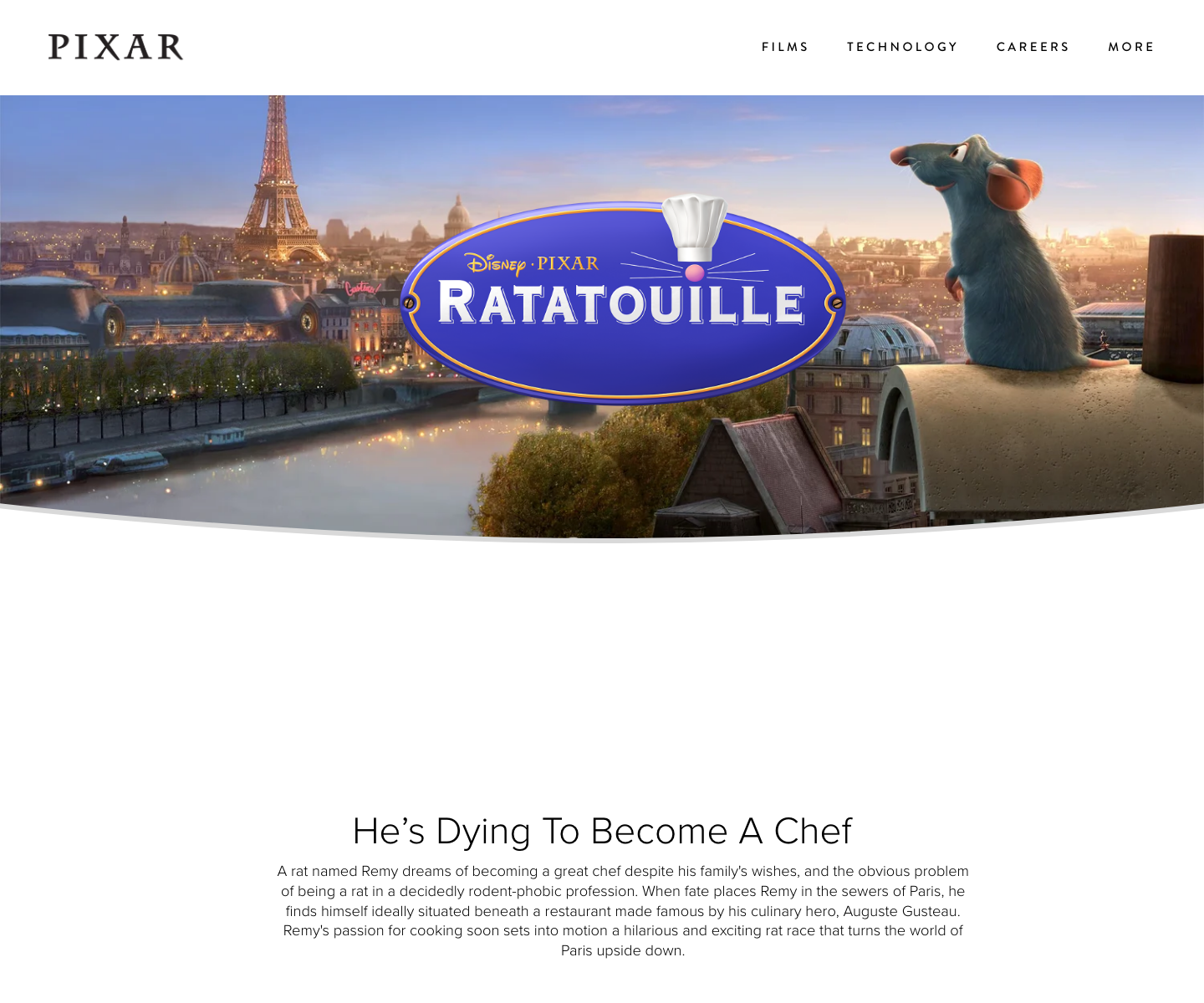
Ratatouille is the cleanest entry point when the goal is pleasure rather than culinary realism. Pixar’s official story follows Remy, a rat with an unusually developed sense of smell and a serious ambition to cook, after he lands beneath a Paris restaurant. The film gives the kitchen real hierarchy, pressure, ego, and repetition, but its central question is generous: can talent come from the person everyone has already dismissed?
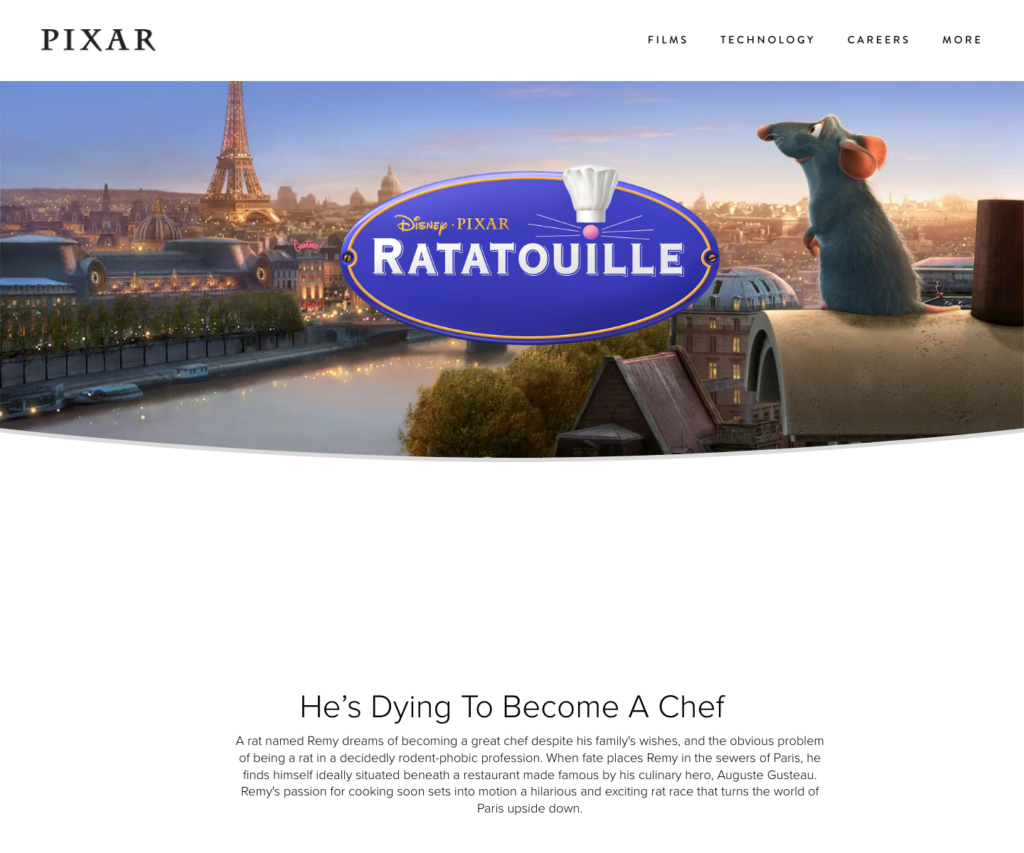
Choose it for a mixed-age group, a tired evening, or a first food movie. The 1 hour 51 minute runtime is manageable, the visual storytelling moves quickly, and the emotional payoff does not require an interest in fine dining. Skip it only if your actual appetite is for documentary-level kitchen practice. The cooking environment is detailed, but the story is still an animated fable about vocation, criticism, and belonging.
Comfort · Focused: Chef
Chef works when you want the kitchen to be an escape route. Universal’s official synopsis follows Carl Casper after he leaves a demanding Los Angeles restaurant and rebuilds around a food truck, his son, his former partner, and friends. The food is tactile and specific, but the emotional engine is a professional reset: make something direct, serve it to people, and recover the reason the work mattered.
This is the lower-stress adult option. It contains career failure, an ugly public reaction, and family repair, but it is not built to punish the viewer. Choose it after a difficult workweek or when Ratatouille feels too young. Skip it if you want the industry to remain brutal. The film is intentionally more interested in rebuilding confidence than in sustaining despair.
Craft · Easy: Tampopo
Janus Films calls Tampopo a story about ramen ronin helping a noodle-shop widow pursue the perfect recipe. That description is accurate but incomplete in the useful way: the central quest keeps breaking into sketches about appetite, etiquette, desire, status, and people behaving strangely around food. It is playful, occasionally erotic, and structurally closer to a roaming feast than a standard restaurant drama.
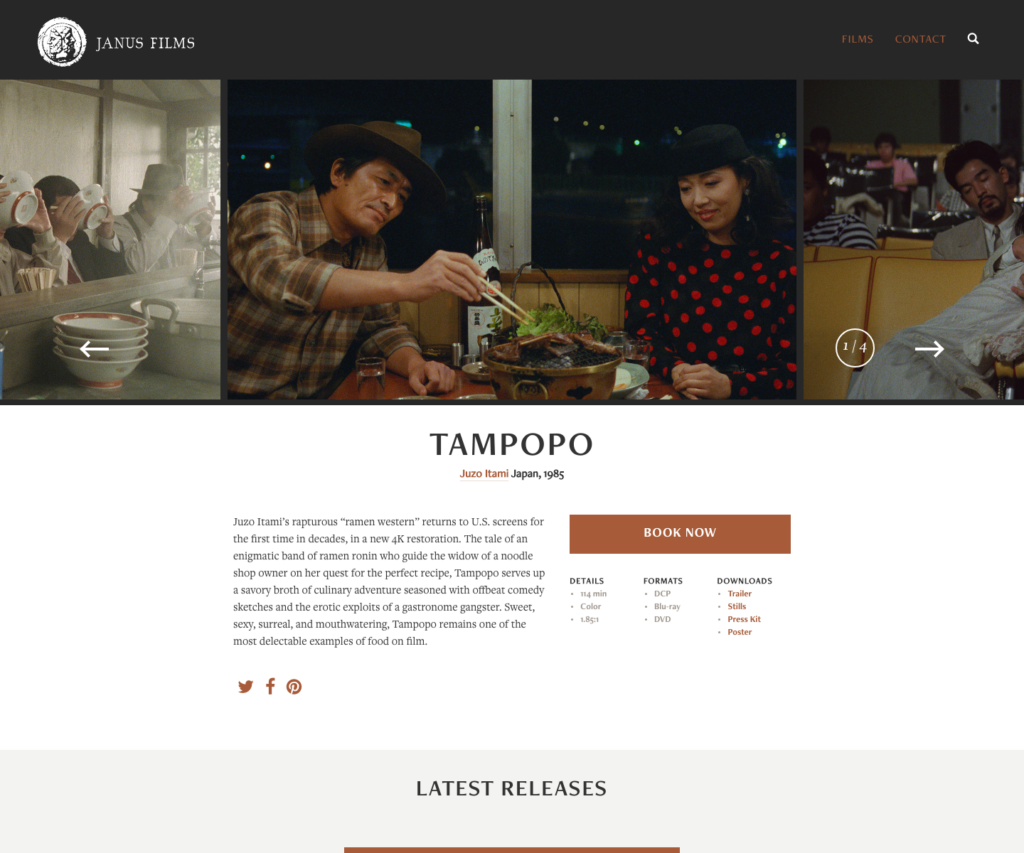
Choose it when subtitles are welcome and you want surprise more than reassurance. It rewards viewers who enjoy tonal jumps and side stories. Skip it for a family night without checking content first, and skip it if digressions make you impatient. Its appeal is exactly the refusal to treat food as one solemn subject.
Craft · Focused: Big Night
Big Night is not comfort food disguised as cinema. Paramount describes two Italian immigrant brothers whose restaurant is nearly empty despite Primo’s culinary ability and Secondo’s attempts to make the business survive. They stake the restaurant on one celebrity dinner. That setup produces a harder decision than “follow your passion”: how much can a craftsperson compromise before the work no longer feels like theirs?
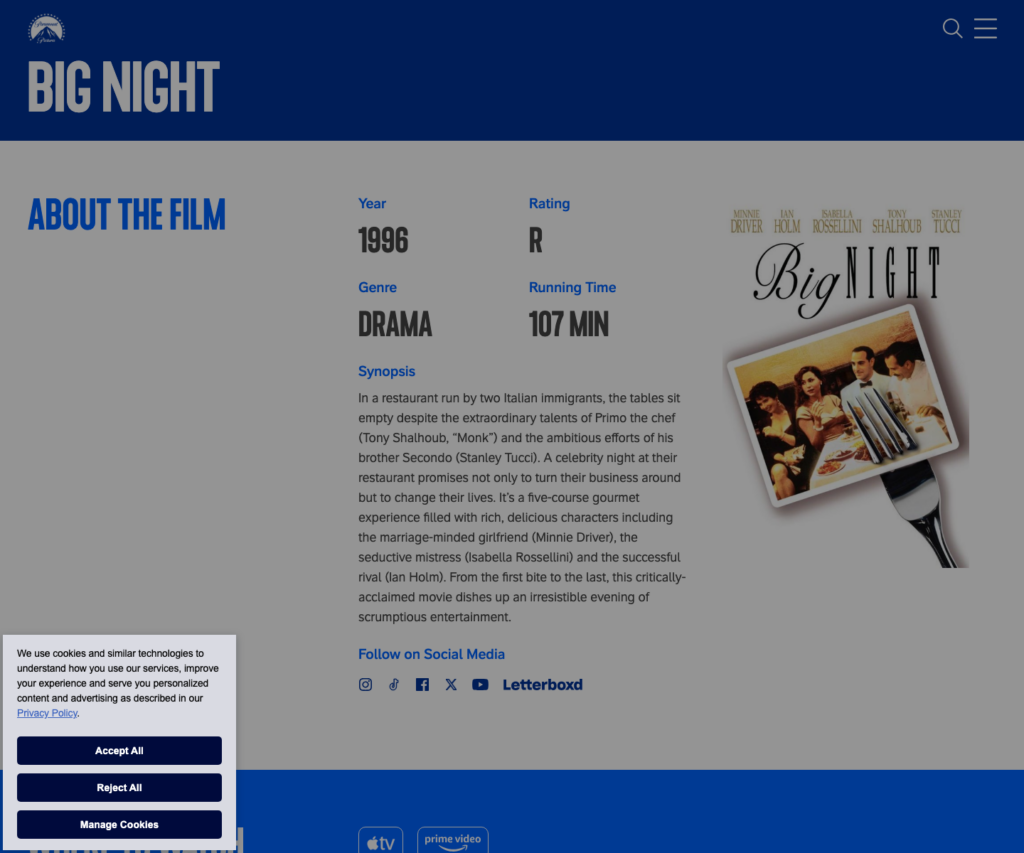
Watch it when you are interested in the tension between product and market, or when the person beside you has ever tried to keep a small business alive. The film runs 107 minutes and allows the brothers’ disagreement to stay complicated. Skip it if you need an uncomplicated victory. The meal matters precisely because success, love, and artistic standards do not line up neatly.
Romance · Easy: Julie & Julia
Sony’s official synopsis links Julia Child’s professional life with Julie Powell’s project to cook 524 recipes in 365 days. That fixed target is why the film belongs here: it shows how a personal challenge can create structure, identity, and public momentum, then begin consuming the life it was supposed to improve.
Choose it if you like deadline stories, writing, or ambitious home cooking more than restaurant operations. It is also a useful antidote to passive inspiration: recipes are completed, mistakes happen, and the project has a measurable end. Skip it if dual timelines irritate you or if the gap between a historical career and a modern personal challenge feels too tidy.
Romance · Focused: The Taste of Things
The Taste of Things treats cooking as a language developed over years. IFC’s official page centers Eugénie, a cook, and Dodin, the gourmet she has worked with for two decades. Their relationship is expressed through labor, attention, ingredients, and the reversal created when he decides to cook for her. At 135 minutes, the film asks for more patience than anything else on this page.
Choose it when the room is quiet, phones are away, and the act of preparing a meal can carry as much meaning as dialogue. Skip it when you want plot density or comic momentum. Calling it merely a food movie undersells the romance; calling it merely a romance misses how thoroughly work and care are fused.
Pressure · Easy: The Menu
Searchlight’s official premise is deliberately compact: a couple travels to an exclusive island restaurant where the chef has prepared a lavish menu with shocking surprises. The less plot you know, the better. What matters for this decision is tone. This is a thriller and satire about luxury, control, service, entitlement, and the stories diners buy alongside the food.
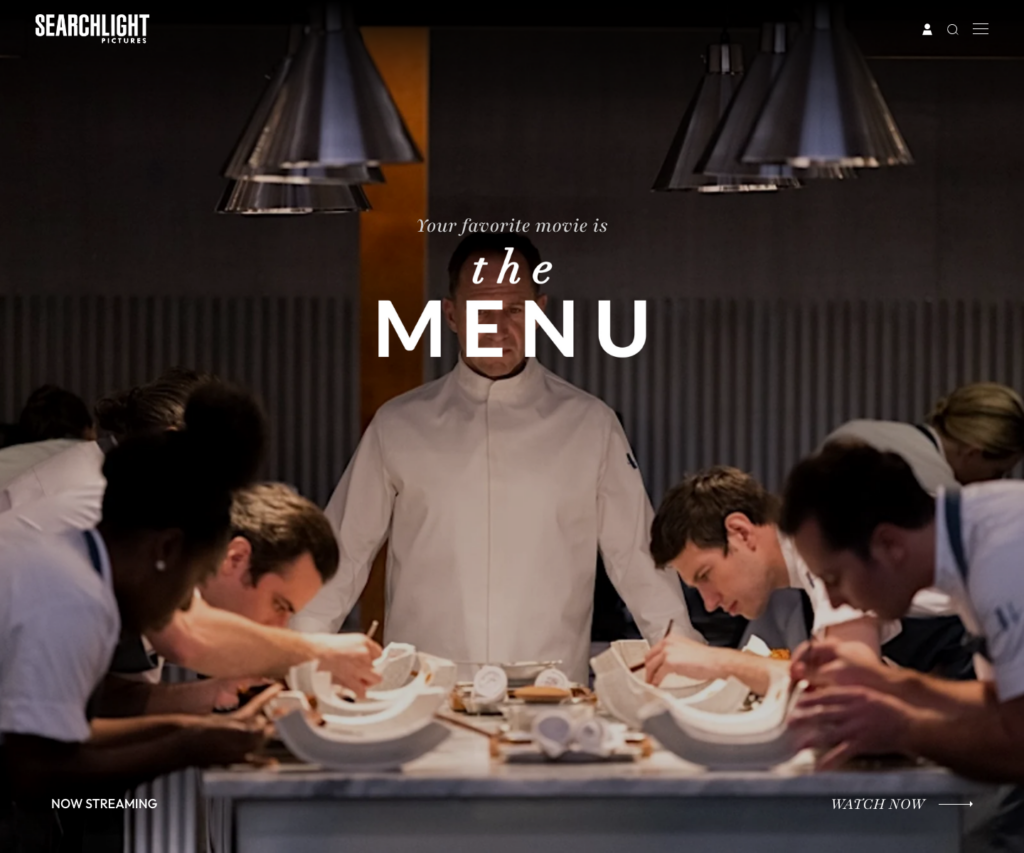
Choose it when you want tension and when jokes about tasting-menu culture sound energizing rather than exhausting. Skip it when “food movie” means relaxation. It is the wrong recommendation for someone who wants to go to bed hungry but peaceful.
Pressure · Focused: Boiling Point
Boiling Point removes the protective distance of satire. Well Go USA’s official page presents Stephen Graham as a head chef trying to hold a restaurant together, while Vertigo’s synopsis describes the relentless pressure of the kitchen’s busiest day. The attraction is not a beautiful menu. It is the accumulating cost of late arrivals, staff conflict, demanding guests, and decisions that cannot be postponed until service ends.
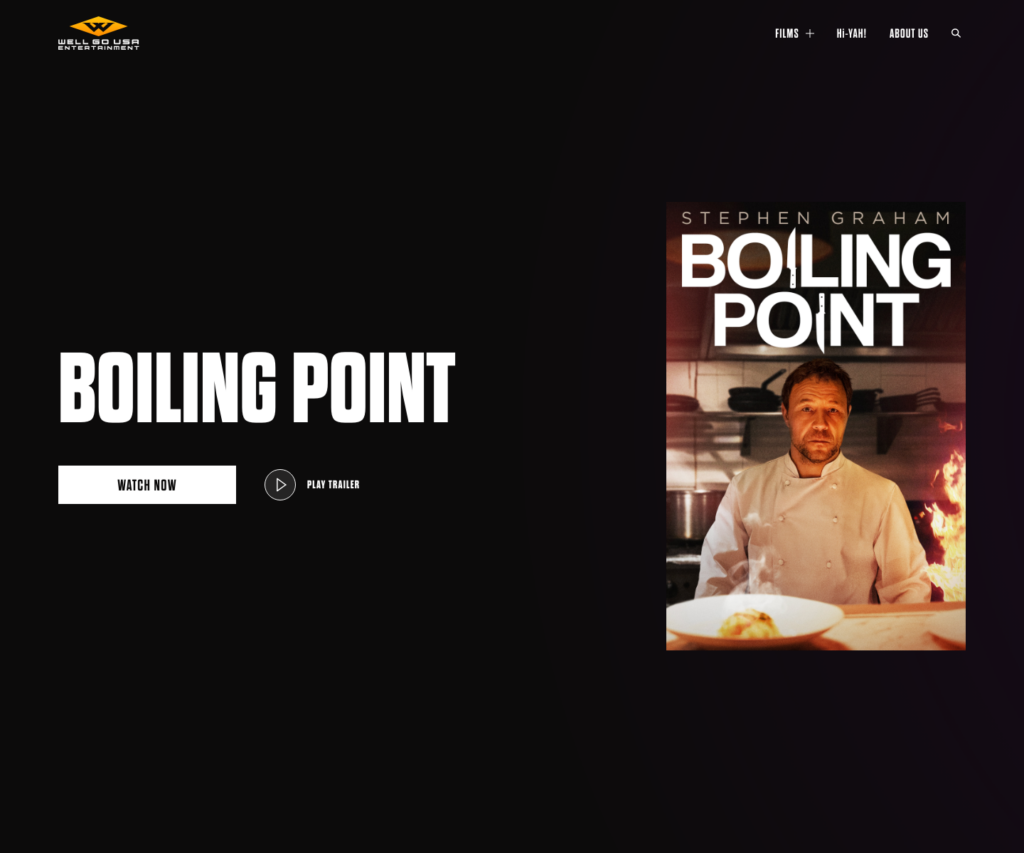
Choose it when you want the darkest, most focused workplace film on this page and can tolerate sustained anxiety. Unlike The Menu, it does not turn restaurant hierarchy into an elaborate joke; the pressure feels close, ordinary, and preventable until it no longer does. Skip it after a difficult shift, or whenever the purpose of the evening is to unwind.
Two viewing plans that avoid the wrong film
Scenario 1: a mixed group on Friday night
Two adults want a food film, one teenager refuses subtitles, and nobody wants horror after a long week. Start with Ratatouille. It has the broadest tonal fit and does not require prior interest in restaurants. Keep Chef as the adult alternative if animation is the objection. Do not compromise on The Menu; its dark tone solves a different problem and will split the room for the wrong reason.
Scenario 2: two serious film viewers with time
Both viewers accept subtitles and want food to carry cultural or emotional weight. Choose The Taste of Things for concentration and romance, or Tampopo for comedy and formal surprise. Pick Big Night instead when one viewer runs a business or cares about the conflict between standards and commercial survival. The “best” changes with the conversation you want afterward.
What this list deliberately leaves out
Documentaries are excluded, even when they are more informative about cooking. Television series are excluded because an episode and a feature film ask for different commitments. Films with one famous dinner scene are excluded when food is not central to the story’s identity. That boundary keeps the page useful instead of turning it into a database of every memorable meal on screen.
Availability is also not ranked. Official studio and distributor pages were checked on September 2, 2026, but subscription catalogs, rental stores, and regional rights move independently. Use the official links below to identify the film, then verify the final provider and price in your country before paying.
How We Checked This
We grouped the visible Search Console demand into fiction-film intent, then checked the official film, studio, and distributor pages on September 2, 2026. The recommendations are editorial mood matches, not audience-score rankings. Five official pages were captured as evidence; a Disney+ capture hidden by a privacy modal, a Criterion capture blocked by Cloudflare, and a Vertigo capture partly obscured by cookie controls were rejected and logged rather than used.
Sources
- Pixar: Ratatouille, checked September 2, 2026.
- Disney Movies: Ratatouille details, checked September 2, 2026.
- Universal Pictures At Home: Chef, checked September 2, 2026.
- Paramount Pictures: Big Night, checked September 2, 2026.
- Janus Films: Tampopo, checked September 2, 2026.
- IFC Center: The Taste of Things, checked September 2, 2026.
- Sony Pictures: Julie & Julia, checked September 2, 2026.
- Searchlight Pictures: The Menu, checked September 2, 2026.
- Well Go USA: Boiling Point, checked September 2, 2026.
- Vertigo Releasing: Boiling Point, checked September 2, 2026.