Categories
Food

Best Food Markets in Europe in 2026: Practical Picks for Travelers

Last updated: April 11, 2026

Food markets are one of the fastest ways to understand a city without sitting through a long tasting menu or an expensive restaurant detour. The good ones solve three problems at once: local context, flexible meal options, and a practical anchor for an afternoon when museums start to blur together.

This guide covers the best food markets in Europe in 2026 with practical price ranges, what to eat, when to go, and which ones are still genuinely useful versus which have become expensive photo sets. Prices and opening hours can shift by vendor, season, and renovation schedules, so treat the numbers here as planning guidance rather than fixed tariffs. The useful question is not which market is most famous — it is which market still works once you arrive hungry, short on time, and unwilling to spend badly just because the setting looks good.

See which European markets are worth planning around

This video helps because it shows the difference between markets that are still for locals and markets that function mostly as tourist background.

Click to watch — cookie consent required
▶  Watch video

Quick answer

The best food markets in Europe in 2026 are the ones that combine strong local vendors, manageable tourist pressure, and a useful location inside the city. For first-timers, markets in Barcelona (with strategy), Lisbon, Budapest, Florence, Porto, and Paris are usually easier wins than giant celebrity food halls built mainly for photos. The right market gives you at least one solid meal at a fair price, one regional product worth noticing, and a neighborhood worth exploring afterward.

If you are planning a wider rail trip, keep our Europe by train guide nearby. If museums are part of the same city break, the museum pass Europe guide pairs naturally with this shortlist.

Quick pick by travel style

If you want… Start with Why
Strong overall mix of quality and value Mercado do Bolhão, Porto Freshly renovated, still local, excellent price-to-quality ratio
One efficient stop for groups with mixed tastes Time Out Market, Lisbon Curated vendors, flexible format, works for everyone
Strong pick for budget eating Great Market Hall, Budapest Stuffed peppers under €3, langos under €4, strongest value in Europe
Architecture + food combined Markthal, Rotterdam The building is a destination; food is genuinely good inside
Strong Paris market with a local feel Marché d’Aligre, Paris Still local, still cheap, a proper neighborhood market
Regional identity in one hall Mercato Centrale, Florence Olive oils, cured meats, fresh pasta — Tuscany in one building

The markets, in detail

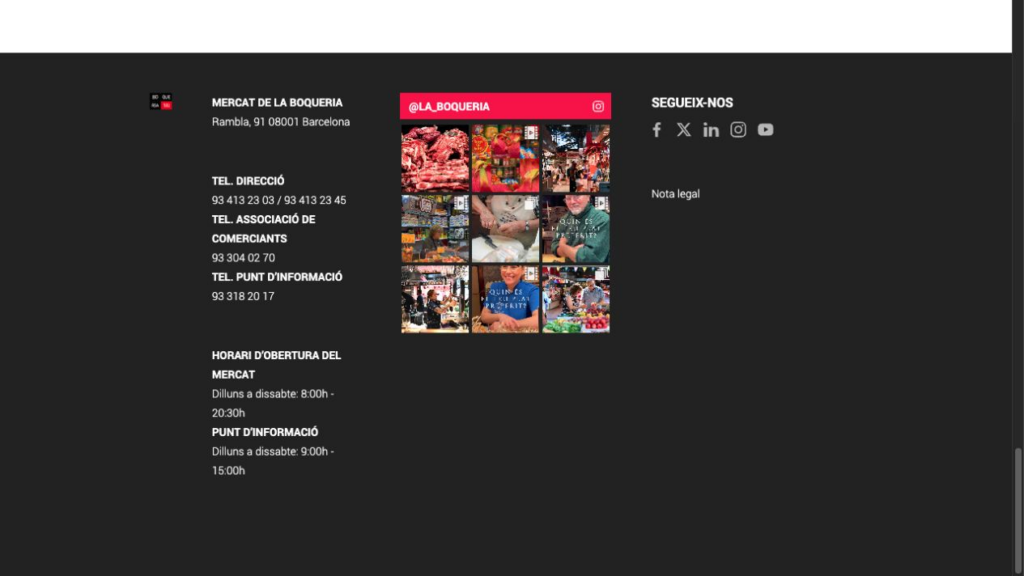
Mercado de la Boqueria, Barcelona — still useful if you handle it correctly

Entry: Free. Open: Mon–Sat 8am–8:30pm (closed Sundays). Best time: Weekdays before 10am or after 4pm.

La Boqueria is the most visited market in Spain and probably the most discussed tourist trap in Europe. Both things are true simultaneously. The outer ring of the market — fruit stalls, fishmongers, charcuterie — is still genuine and useful. The inner area near the main entrance, with its pre-cut fruit cups (€4–8 for 200g of mediocre watermelon), smoothie bars, and seafood counters aimed at walk-ins, is where the tourist markup is concentrated.

What to eat and pay: Fresh oysters at the fish counters (€1.50–2.50 each), jamón ibérico sliced to order (€6–12 for a portion), local cheeses (€3–6 per 100g), and grilled seafood at counter stalls deeper in the market (often around €10–14 for a full plate) are the legitimate reasons to be here. Avoid the pre-packaged fruit salads and the overlit tapas counters near the main entrance.

Neighborhood context: La Boqueria sits on Las Ramblas, which means the immediate surroundings are heavily tourist-facing. The better move is to use the market as an entry point to El Raval (left side on exit) or to walk up toward the Gothic Quarter (right side). Mercat de Santa Caterina in El Born (open Mon–Sat, less crowded, equally good produce, beautiful Gaudí-adjacent roof) is a genuinely excellent alternative that handles tourist pressure far better.

Worth crossing the city for? Only if you are already in the Gothic Quarter or Las Ramblas area. As a standalone destination requiring a 30-minute transit detour, Mercat de Santa Caterina is the better choice.

Mercado da Ribeira / Time Out Market, Lisbon — the hybrid that actually works

Entry: Free. Open: Sun–Wed 10am–midnight, Thu–Sat 10am–2am. Best time: Weekday lunch (12–2pm) before the evening crowd.

Time Out Market Lisbon transformed the historic Mercado da Ribeira shell into a curated food hall in 2014, and it has become one of the most imitated food market formats in the world. The model works because the vendors are not random — they are selected from Lisbon’s best restaurants and food producers, rotated periodically. This means the quality floor is higher than a typical food court, and the tourist pressure does not automatically degrade what you eat.

What to eat and pay: Cervejaria Ramiro’s prawns at the market outpost (€12–18 for a large portion), Tasca do Chico’s bifanas (pork sandwiches, €6–8), fresh pastéis de nata from the dedicated counter (€1.50–2 each), and regional cured meats and cheeses from the deli section (€8–14 for a sharing plate). Full meals average €12–18 per person; budget €20 if you want a drink.

Neighborhood context: The market sits on the Ribeira waterfront near Cais do Sodré, five minutes’ walk from the Alfama tram stop and 10 minutes from Chiado. Pairing the market with a walk up to Alfama or a tram ride through Mouraria makes the visit into a half-day structure rather than a one-hour stop.

Worth crossing the city for? Yes — it is one of the most reliable food stops in Lisbon for mixed groups. If you are a solo traveler or couple who prefers a more local atmosphere, try Mercado de Campo de Ourique (residential neighborhood, smaller scale, excellent local lunch options, main dishes €8–12, open Tue–Sun).

Mercato Centrale, Florence — the easiest Italian market for first-time travelers

Entry: Free. Ground floor market: Mon–Fri 7am–2pm, Sat 7am–5pm. Upper food hall: daily 10am–midnight. Best time: Ground floor before noon; upper hall 12–1:30pm for lunch.

Mercato Centrale is two markets in one building. The ground floor is a traditional working market selling Tuscan produce, fresh pasta, tripe sandwiches (lampredotto, the Florentine street food at €4–6), butchers, olive oil vendors, and cheese. The upper floor, opened in 2014, is a curated food hall with pasta stations, Florentine steak, pizza al taglio, and a wine bar.

What to eat and pay: Lampredotto sandwich at the Nerbone counter (€4–5) is the correct answer for a quick breakfast or mid-morning snack — it is the city’s signature street food and this is the most accessible version. Fresh pasta to cook (€4–8/100g), wild boar salumi (€6–10 for a small board), Pecorino Toscano aged wheels (€3–5/100g). Upstairs: ribollita (Tuscan bread soup, €7–9), tagliatelle al ragù (€10–13), Fiorentina steak per 100g (€8–12/100g, minimum 800g, split two ways).

Neighborhood context: The market sits in San Lorenzo, two minutes from the Duomo. The San Lorenzo street market (leather goods, tourist souvenirs) surrounds the building and can feel overwhelming. Go directly inside and ignore the stalls immediately outside — they are not part of the food market and are purely tourist-facing.

Worth crossing the city for? Yes if you are based near Santa Croce or Oltrarno — the walk is part of the Florence experience. From Fiesole or a far hotel, the upper food hall alone may not justify the commute; go for the ground-floor lampredotto and combine with a Duomo visit.

Great Market Hall (Nagyvásárcsarnok), Budapest — the best budget market in Europe

Entry: Free. Open: Mon 6am–5pm, Tue–Fri 6am–6pm, Sat 6am–3pm. Best time: Tuesday to Thursday morning, 9–11am.

Budapest’s Great Market Hall is a 19th-century iron-and-tile building on the Pest side of the Chain Bridge. It is one of the few major European markets where local families still do weekly shopping, not because they have no alternative, but because prices are genuinely lower than supermarkets for produce and meat. That dual-use market reality is visible immediately on the ground floor.

What to eat and pay: Langos (fried dough with sour cream and cheese, €2.50–4) — the must-order here and genuinely excellent. Stuffed peppers and cabbage rolls from prepared-food counters (€2–3.50 each). Hungarian sausage and salami to take away (€4–8 per 200g for quality producers). Ground-floor produce: peppers, paprika (€2–5 per bag, far better quality than the tourist-shop version), cherries and stone fruit in summer. Upstairs: embroidery and tourist crafts — skip unless you specifically want them.

Neighborhood context: The market is at the Pest end of Liberty Bridge, which is also worth walking across for a view. The immediate neighborhood (Fővám tér) connects easily to the Jewish Quarter (Ruin Bar district) and the Central Market’s surrounding streets, which have several good casual lunch options in the €6–10 range.

Worth crossing the city for? Usually yes — it is one of the stronger single stops in Budapest at almost any budget level. Budget travelers can reasonably plan a full morning here; the food costs are low enough that you can often eat a complete breakfast and add a second snack for under about €7 total.

Mercado do Bolhão, Porto — the best-value renovation in Europe

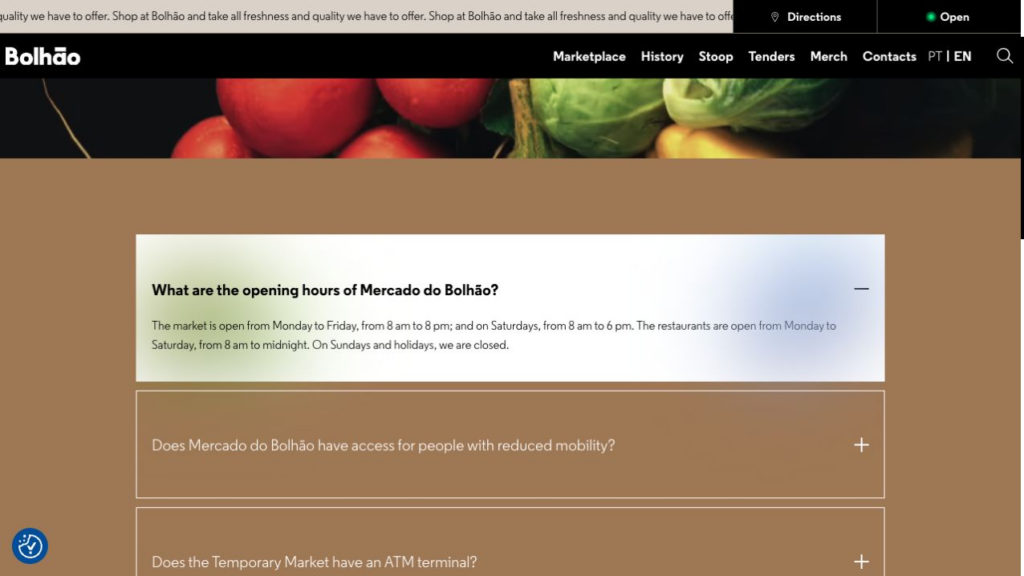
Entry: Free. Open: Mon–Fri 8am–8pm, Sat 8am–6pm. Best time: Weekday morning, 9–11:30am.

Bolhão reopened in 2022 after a full renovation that preserved the 1914 iron-and-stone structure while modernizing the vendor spaces. It is one of the few major European market renovations that did not evict local vendors in favor of branded concepts. The result is a market that still sells fresh fish, regional sausages (chouriço, linguiça), local bread, flowers, and vegetables alongside newer food stalls.

What to eat and pay: Bifanas (pork sandwich, €3–5) at the market’s own restaurant counter. Pastéis de bacalhau (salt cod fritters, €1.50–2 each). Regional chouriço to take away (€5–9 per link). Fresh shrimp and shellfish from the fish counters in the back (€8–15 for a portion to eat at the market). Queijo da Serra (sheep’s milk cheese from the Estrela mountains, €4–8/100g). Full sit-down lunch at the market restaurant: €10–14 per person.

Neighborhood context: Bolhão is in central Porto, two minutes from the metro station of the same name. The surrounding area — Rua de Santa Catarina shopping street, the São Bento train station with its azulejo panels, and the Baixa district — makes the market a natural part of a morning Porto walk. The Ribeira waterfront is 15 minutes on foot downhill.

Worth crossing the city for? Yes, and it is the best market in Portugal right now. If you are combining Porto and Lisbon on the same trip, Bolhão is the more local-feeling market of the two.

Markthal, Rotterdam — architecture plus actual food

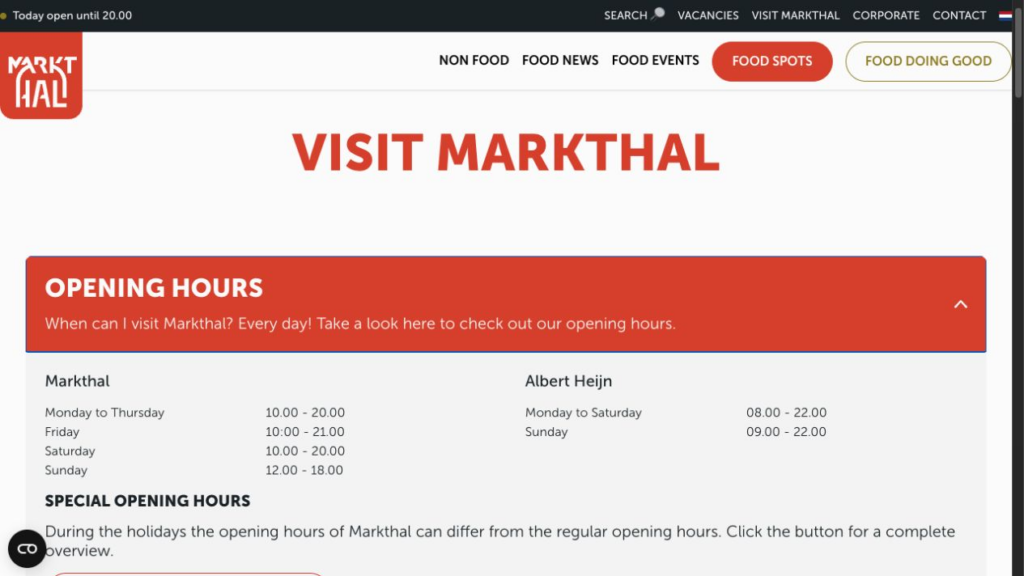
Entry: Free. Open: Mon–Thu and Sat 10am–8pm, Fri 10am–9pm, Sun 12pm–6pm. Best time: Weekday lunch or Saturday morning.

The Markthal opened in 2014 inside a residential arch building designed by MVRDV — the ceiling is a 100m x 70m mural of giant food illustrations, and the apartments are built into the horseshoe structure above the market. It is unusual in European market architecture and worth seeing on that basis alone, but the food is also genuinely good.

What to eat and pay: Dutch stroopwafels fresh from the press (€2–3.50), raw herring with onions at one of the fish stalls (€3–5), cheese tasting (Gouda aged 12–36 months, €2–4 per piece), fresh Vietnamese bánh mì (€6–8), and Turkish-style lahmacun (€4–6). The indoor market has around 100 fresh-produce and specialty stalls plus 15 food stalls; the lower level connects to a supermarket and additional food retail.

Neighborhood context: Markthal is in central Rotterdam, five minutes’ walk from Blaak station and adjacent to the famous Cube Houses (Kubuswoningen, €3.50 entry to visit one). The old harbor (Oudehaven) and the new Fenix Food Factory in Katendrecht (a smaller, hipper market worth visiting if you are staying multiple days) are both within a 15-minute walk. Rotterdam is a full-day architectural destination; the market works as a lunch stop inside a broader design-focused city walk.

Worth crossing the city for? Yes if you are interested in contemporary architecture. As a food-only destination, it is good but not the strongest market in Europe. The combination of building + food + Cube Houses in the same half-day makes the visit genuinely efficient.

Marché d’Aligre, Paris — the market that tourists miss

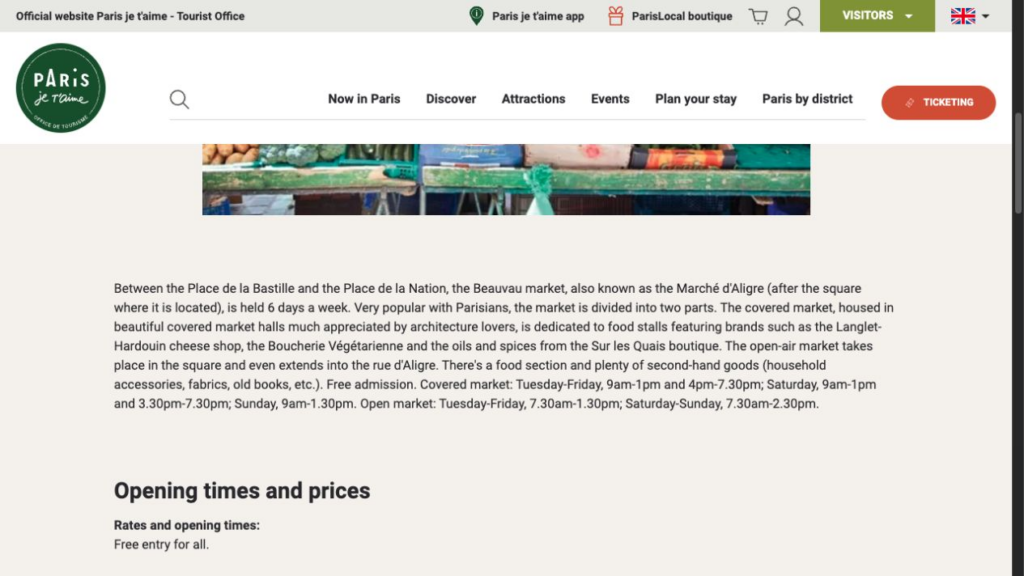
Entry: Free. Open: Tue–Sun 7:30am–1:30pm (outdoor market), Tue–Sun 9am–1pm (covered Beauvau hall). Best time: Saturday 9–11am.

The Marché d’Aligre in the 12th arrondissement is the best Paris market that most tourists do not visit. It combines a North African-influenced outdoor produce market with a proper covered hall (Marché Beauvau) that has been operating since 1779. Locals from the 12th and the surrounding Bastille neighborhood shop here weekly; prices are lower than comparable markets because the area is not on the main tourist circuit.

What to eat and pay: Outdoor produce: seasonal vegetables at €1–3/kg, olives and preserved lemons from North African stalls (€2–4/100g), fresh herbs and spices cheaper than anywhere else in Paris. Inside Beauvau: charcuterie (€5–12 for a small plate), wine from neighborhood caves (€3–5/glass), cheese from affineurs (€4–8/100g). No formal food hall format — you buy and eat standing, or take away. Budget €8–12 for a complete market breakfast or snack combination.

Why not the Marché des Enfants Rouges? The Marché des Enfants Rouges in Le Marais (Paris’s oldest covered market, 1615) is also genuinely good, but more expensive and increasingly tourist-facing. Moroccan plates run €12–15; Japanese bento €10–14. Still worth a visit if you are in Le Marais, but Aligre is the more honest market experience of the two.

Neighborhood context: Place d’Aligre is in the Bastille–Nation area, accessible via Ledru-Rollin metro (line 8). The Coulée Verte (Paris’s original elevated park, the model for the New York High Line) starts three minutes away. Combining the market with a walk along the Coulée Verte and a coffee in Bastille is a strong half-morning in Paris that feels genuinely local.

Worth crossing the city for? Yes if you want a Paris market experience without tourist pricing. Not worth it as a supplement to a quick Paris weekend that already covers the main arrondissements; in that case, Marché des Enfants Rouges is more convenient to the Marais sightseeing cluster.

Quadrilatero dei Mercati, Bologna — the best food city market in Italy

Entry: Free (outdoor streets and market halls). Open: Roughly Mon–Sat 7am–2pm for produce, some stalls re-open 5–7:30pm. Best time: Tuesday–Friday 9–12pm.

Bologna is consistently considered the best food city in Italy — not Rome, not Florence — and the Quadrilatero market district near Piazza Maggiore is the reason. The area is not a single building but a cluster of interconnected market streets: Via Drapperie, Via Pescherie Vecchie, Via della Clavature, and their surrounding alleys. Fishmongers, pasta makers, salumieri (cured meat shops), cheese stores, and produce vendors occupy the same network of medieval porticoed streets they have occupied for centuries.

What to eat and pay: Mortadella di Bologna — the original, from producers who still make it without mass-production shortcuts — sliced at a deli counter (€2–4 per 100g). Fresh pasta (tortellini, tagliatelle) made on-site at pasta labs: €4–8 per portion, €6–12 to take home. Parmigiano-Reggiano aged 24–36 months directly from wholesale vendors at lower-than-retail prices (€3–5/100g). Culatello (the premium cured ham from the Po Valley) at specialty salumerie (€8–14/100g). Lambruco wine by the glass at enoteca counters (€2.50–4). Full sit-down lunch at a tratoria in the Quadrilatero: €15–22 per person with wine.

Neighborhood context: The Quadrilatero sits directly behind Piazza Maggiore, Bologna’s main central square. It connects immediately to the Torre degli Asinelli (€5 entry, 498 steps, best views in the city), the university quarter, and the covered porticoes that run the length of the city. Bologna rewards wandering without a tight plan; the market is the best starting point for a city built around food, architecture, and one of Europe’s oldest universities.

Worth crossing the city for? Bologna itself is worth the trip from anywhere in northern Italy. If you are doing a Milan–Florence–Rome rail journey, Bologna is a natural lunch stop (45 min from Milan, 35 min from Florence). Arriving hungry and going straight to the Quadrilatero is one of the best single meals a traveler can have in Italy for under €20 total.

Tourist-trap patterns to avoid across all markets

Pre-cut fruit cups at premium markets: La Boqueria’s €6–8 fruit cups, similar products at Mercado de San Miguel in Madrid (a largely tourist-facing market worth skipping unless you specifically want a standing tapas experience at €3–6/tapa). Buy whole fruit from produce stalls instead — better quality at 20–30% of the price.

Markets rebuilt entirely for dining with no working-market function: Mercado de San Miguel (Madrid), Mercado de la Paz’s upper floor, and several newer “food market” concepts in European capitals have essentially zero local daily-shopping function. They are tapas bars in a market building. Fine if you want tapas; misleading if you expect a real market atmosphere.

Queue following without context: In heavily visited markets, queues measure visibility more than quality. The better signal is whether the vendor sells simple, unglamorous items (fresh pasta, whole fish, sausage links) to people with shopping bags. If every customer is a tourist taking a photo before eating, that is information.

Arriving at peak tourist hours: 11am–1:30pm on weekends is the hardest time at every market on this list. Either go earlier (9–10:30am, when locals are shopping) or later in the afternoon when the lunch rush clears and some vendors discount end-of-day produce.

Ignoring later-day discounts: Some indoor markets discount prepared food or remaining produce later in the day, depending on the vendor and closing time. Morning-only markets may also soften prices near closing, but it is not a universal rule and the best stalls often sell through before then.

FAQ

Are food markets in Europe still worth visiting in 2026, or are they tourist traps?

Many are partially tourist-facing, but that does not make them useless. Markets like Bolhão in Porto, Great Market Hall in Budapest, Marché d’Aligre in Paris, and Bologna’s Quadrilatero are still genuinely local-use markets with tourism layered on top — not tourist attractions that replaced local markets. The difference is visible immediately in whether produce stalls outnumber souvenir stalls and whether people are carrying shopping bags or cameras.

What is the best time of day to visit a European food market?

A good default is weekday mornings, often between about 9am and 11:30am. Selection is usually strong, the space is active but not crushed, and you are more likely to encounter both locals and genuinely good prepared food. Saturday lunch hours are usually the hardest slot at the best-known markets because tourist density is high and the most interesting produce is often already picked over.

Which European food market gives the best value for budget travelers?

Budapest’s Great Market Hall is one of the clearest answers. Langos often lands around €2.50–4, stuffed peppers around €2–3.50, and good Hungarian salami to take away around €4–8. A full breakfast, a second snack, and ingredients to take back to an apartment can stay under roughly €12. Bologna’s Quadrilatero is especially strong if your priority is quality Italian food products, while Bolhão in Porto is a strong pick for seafood and cured meats at fair prices.

Is La Boqueria in Barcelona still worth visiting?

Yes, with strategy. Arrive before 10am on a weekday, walk past the main entrance stalls (fruit cups, tourist-facing counters), and focus on the outer ring of fishmongers, jamón vendors, and the counter stalls at the back (Bar Pinotxo, Kiosko Universal). Treat it as an introduction to the Gothic Quarter neighborhood rather than a destination in itself. If you only have one market visit in Barcelona, Mercat de Santa Caterina in El Born is less crowded and equally good.

What should I actually eat at European food markets?

The answer varies by market, but the logic is consistent: eat the thing the market is built around, not the most recognizable tourist item. At Bologna: mortadella and fresh pasta, not pizza. At Budapest: langos and stuffed peppers, not goulash soup. At Lisbon: bifanas and pastéis de bacalhau, not the branded restaurant outposts. At Florence: lampredotto sandwich (the city’s tripe sandwich culture), not a generic pasta plate. At Porto: salt cod fritters and fresh shellfish, not the bread-and-olive-oil starters common at tourist restaurants nearby.

Should I plan a whole day around a food market?

No — two to three hours is the right unit for most markets. The model that works: arrive hungry, eat a proper market breakfast or early lunch (€8–15), buy one regional product to take away if you have accommodation with a kitchen, then let the market connect into the surrounding neighborhood for the next part of the day. Markets that justify four hours or more are the Quadrilatero in Bologna (because the surrounding streets are part of the same food culture) and possibly Bolhão in Porto if you are combining it with the adjacent Rua de Santa Catarina and São Bento visit.

Which Paris market is best for travelers who want a local experience?

Marché d’Aligre in the 12th arrondissement. It is a genuine neighborhood market with North African produce influence, reasonable prices, and zero tourist-facing marketing. The Marché des Enfants Rouges in Le Marais is more convenient to the main tourist circuit and still genuinely good, but noticeably more expensive and more photographed. Avoid the Marché Bastille (Richard Lenoir boulevard) as a standalone — it is large and local but the prepared-food options are limited compared to Aligre.

What is the best Italian food market that is not in the main tourist cities?

Bologna’s Quadrilatero is the most direct answer — the city is 45 minutes by high-speed train from Florence and 35 minutes from Milan, and the market is one of the finest concentrations of Italian food culture accessible to travelers. Outside the north, the Mercato di Ballaro in Palermo (Sicily) is the most extraordinary market in southern Italy — sprawling, loud, incredibly cheap (arancino €1.50–2.50, raw sea urchin €3–5 per lobe), and a complete sensory immersion in Sicilian food culture.

Planning pages worth checking

Leave a Reply