
Last updated: August 26, 2026
Last updated: August 26, 2026.
The wrong food documentary can ruin the exact evening you meant to save. You wanted a calm hour of travel and cooking; Netflix gave you industrial farming, contamination, and a reason to inspect every item in the refrigerator.
This Netflix-only guide starts with the evening you actually have. Pick your time, your tolerance for uncomfortable material, and what you want to understand. The eight core picks below range from polished chef portraits and street-food episodes to food-history series and deliberately difficult industry investigations.
How we checked this
We checked Netflix’s official food catalogue, Tudum editorial pages, title pages, and Netflix Media Center on August 26, 2026. Catalogue availability changes by country and account, so use this guide to choose a title, then confirm it inside Netflix before planning your evening.
Find the right Netflix food documentary for tonight
The picker does not pretend there is one best food documentary. It matches a title to your available time, preferred tone, and the question pulling you toward the subject.
[htb_netflix_food_picker]
Best food documentaries on Netflix in 2026: quick picks
| If you want… | Start with | Skip it if… |
|---|---|---|
| Useful cooking ideas without a competition | Salt Fat Acid Heat | You want restaurant drama or an exposé |
| Travel, neighborhoods, and working cooks | Street Food: Asia | You want one feature-length story |
| Food history with real cultural weight | High on the Hog | You only want technique |
| Chef craft and institutional influence | Chef’s Table: Legends | Glossy cinematography irritates you |
| A new 2026 feature about an industry | Big Chicken | You wanted comfort viewing |
| Supply-chain investigations by episode | Rotten | You dislike advocacy-led television |
The table is a starting point, not a ranking. High on the Hog is stronger than Salt Fat Acid Heat for history, but that does not make it the better choice when you want to cook tomorrow. Big Chicken is more current, but recency is not a reason to choose an investigation on a quiet night.
When you have one hour and want to feel better afterward
Start with Salt Fat Acid Heat
Salt Fat Acid Heat remains the safest recommendation for someone who wants food television to make cooking feel more understandable. Netflix presents it as a limited series led by Samin Nosrat, built around the four forces in its title. The structure gives each episode a job, so you can watch one without feeling that you abandoned a ten-hour project.
Its real advantage is emotional. The show is curious rather than punishing. It travels, cooks, and explains without turning dinner into a moral test. Choose it if you want one useful idea and a pleasant hour. Skip it if your question is about labor, restaurant economics, agriculture, or corporate power; it is not trying to answer those.
Choose one Street Food episode when place matters more than technique
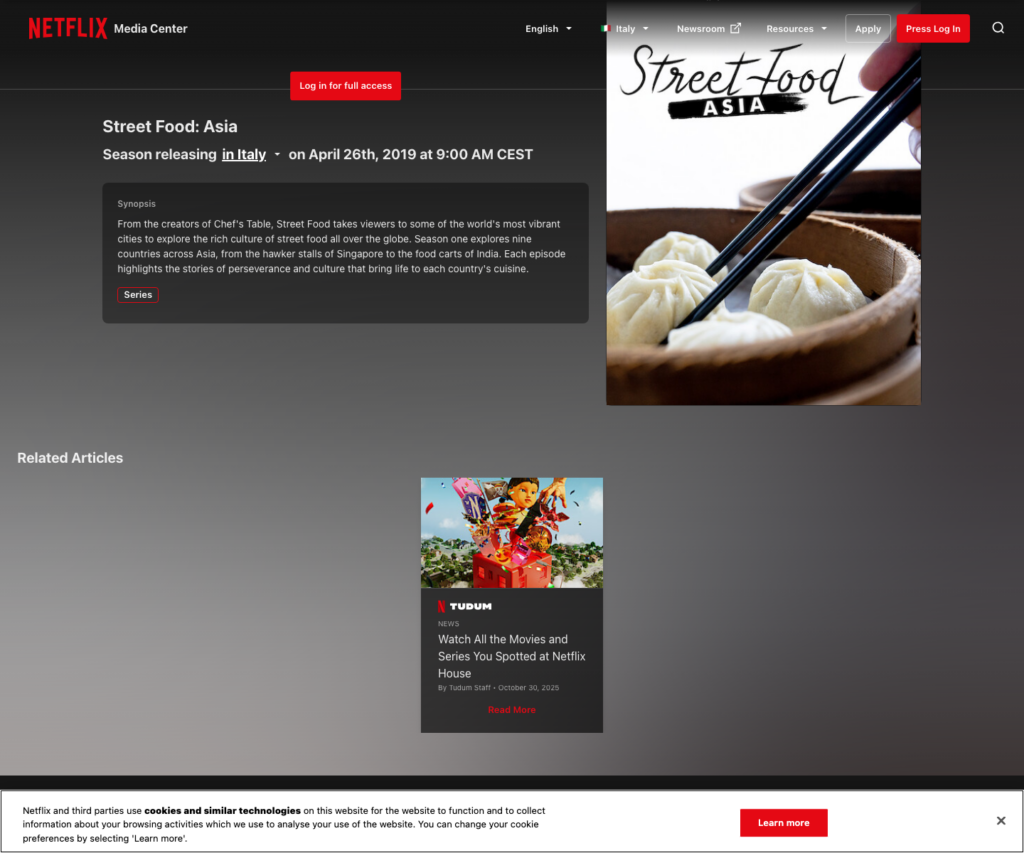
Street Food: Asia works when the cook, neighborhood, and dish need to remain connected. Netflix’s Media Center describes the series through local culture and the people behind street food across Asian cities. That makes it a better pre-trip watch than a generic cooking tutorial: it teaches you to notice context, not merely copy a plate.
The series format is useful on a weekday. Choose one city rather than treating the season as a checklist. If your attention is limited, a focused episode about one place usually leaves a stronger memory than three episodes watched because autoplay made the decision.
When you want history, not food decoration
High on the Hog is the history-first choice
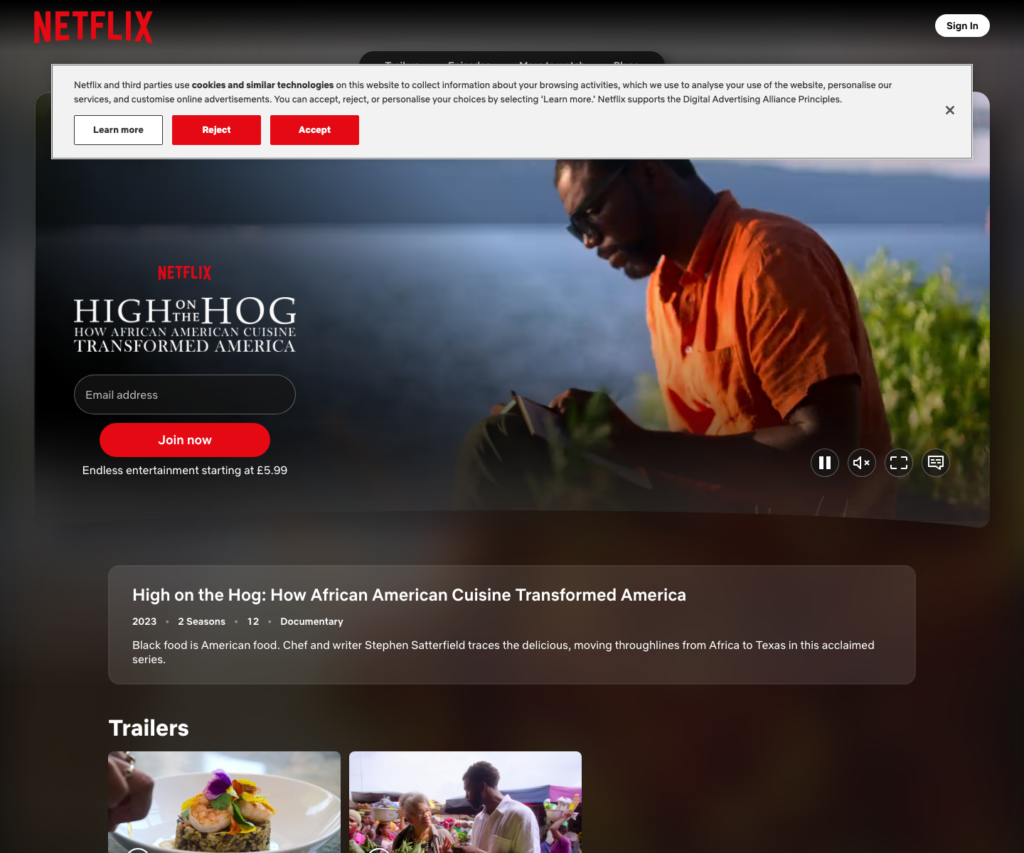
Netflix lists High on the Hog as a two-season documentary series in which Stephen Satterfield traces African American cuisine from Africa to Texas. The food is not a backdrop. It carries migration, forced movement, resistance, entrepreneurship, celebration, and memory.
This is the right choice when a dish makes you ask who carried it, who adapted it, and who received credit. It is the wrong choice if you are only looking for recipes. The series asks for more attention than a chef profile because the historical connections are the point, not seasoning around the edges.
Why history changes what “best” means
A beautifully photographed dish can still produce a shallow documentary. History gives the viewer a test: after the episode, do you understand why this food exists in this place, and whose work made it possible? If the answer is no, the film may have entertained you without explaining much.
That is also why our broader food documentary guide across Netflix, PBS, Apple TV+, rentals, and independent platforms does not force every title into one league table. Different questions need different films.
When you want chef craft without a cooking contest
Chef’s Table: Legends is polished on purpose
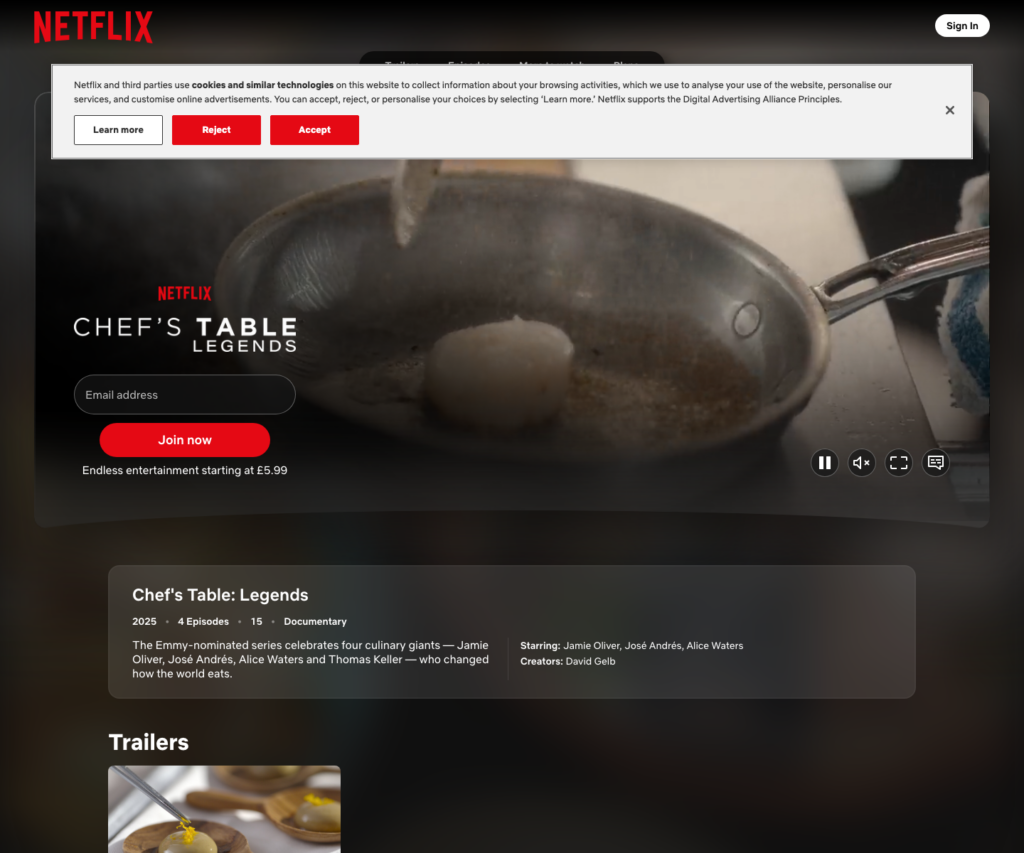
Netflix lists Chef’s Table: Legends as a four-episode 2025 documentary series focused on Jamie Oliver, Jose Andres, Thomas Keller, and Alice Waters. The selection moves beyond individual dishes into institutions: restaurants, farm-to-table ideas, disaster relief, public food work, and the machinery of celebrity chef culture.
Pick one subject whose work already raises a question for you. Do not watch all four merely because the series is short. The visual language is reverential, and that is both its strength and its limitation. It can make standards, repetition, and influence legible. It can also make the chef world look cleaner and more coherent than restaurant labor often feels.
Skip it when: you are tired of prestige profiles, want cooks outside famous institutions, or need scrutiny rather than admiration. In that mood, Street Food, High on the Hog, or an investigative title is a better use of the subscription you already pay for.
When you are ready for the uncomfortable shelf
Big Chicken is the genuinely new 2026 starting point
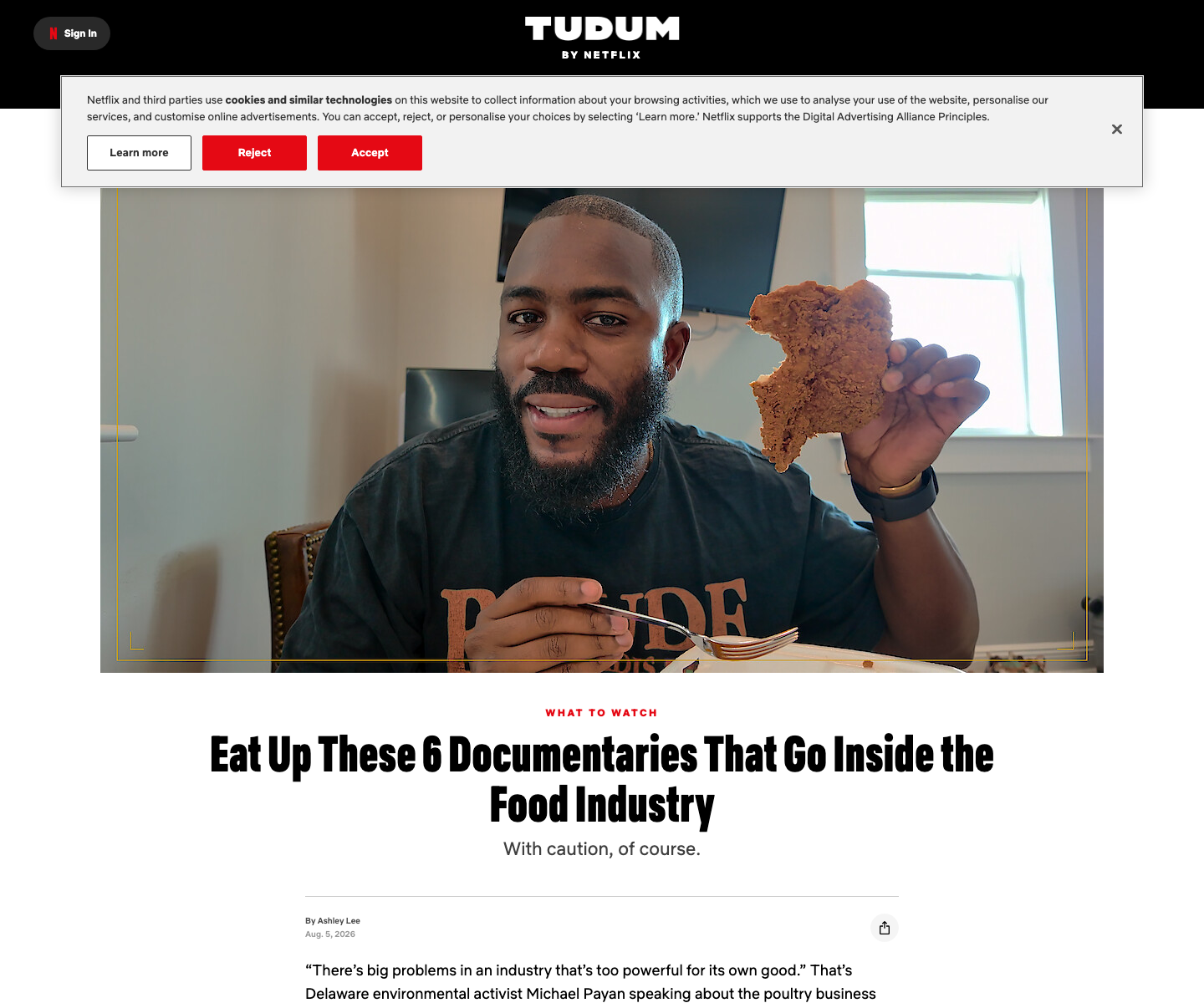
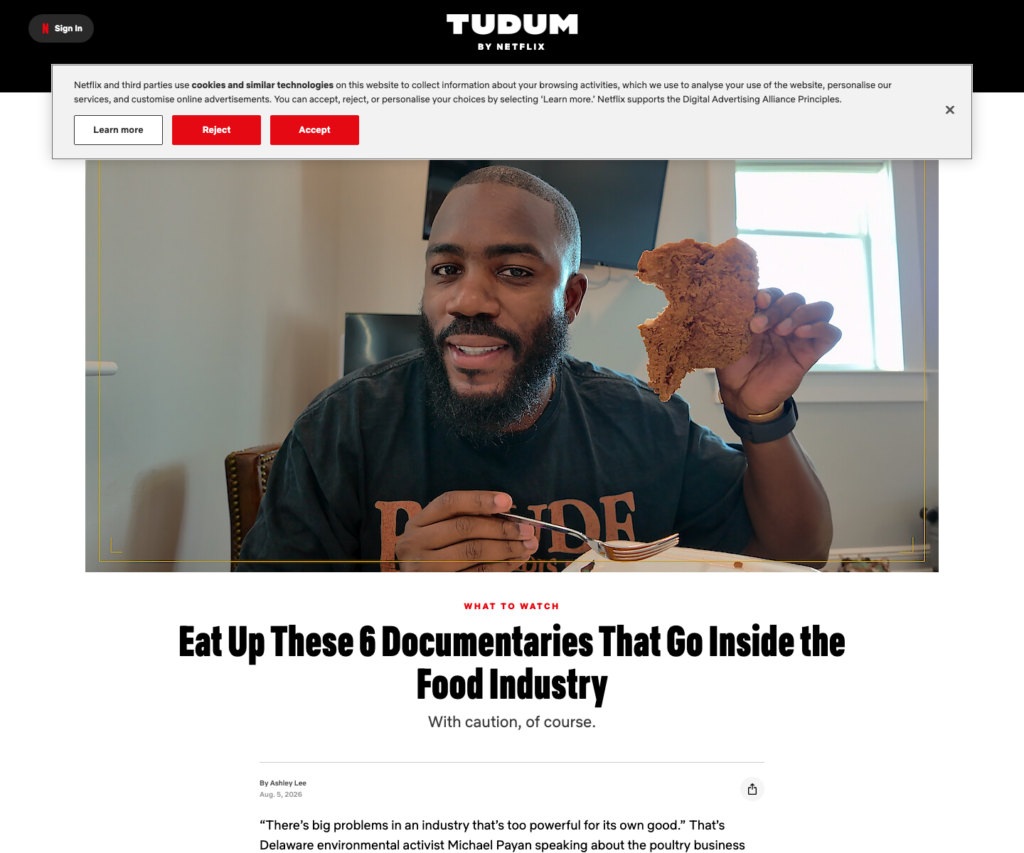
Netflix’s official August 2026 Tudum food-documentary guide lists Big Chicken: A Fast Food Conspiracy as a current food-industry pick, while Netflix’s Media Center confirms the film follows comedian Mo Gilligan through a 28-day fried-chicken experiment spanning South London and the United States. It examines the history, business, health effects, cultural stereotypes, and industrial scale behind the food.
The comic host does not make the subject light. It makes the entry point familiar before the film widens into a system. Choose it when you specifically want a current feature and can tolerate a film that may change how your takeaway looks afterward.
Rotten works better when you have one narrow question
Rotten is a two-season investigative series about the forces shaping the global food supply chain. The episode structure is the reason to choose it. You do not need to accept a sweeping thesis about every item in the supermarket; you can start with one commodity and judge the reporting on that subject.
Watch one episode, then stop. Supply-chain series become less useful when five different industries blur into one generalized feeling that everything is broken. A focused viewing session leaves you with claims you can inspect rather than anxiety you cannot use.
Poisoned is for food-safety questions, not diet advice
Netflix’s 2026 Tudum guide describes Poisoned: The Dirty Truth About Your Food as an investigation of foodborne illness, regulation, corporate conduct, and criminal cases. That makes it a food-safety documentary, not a personal nutrition plan. The distinction matters.
Do not treat a documentary as medical advice, and do not redesign your diet from one dramatic sequence. Use it to understand the regulatory problem being alleged, then go to public-health sources if you need guidance about an actual health decision.
You Are What You Eat is the lighter episodic route into a diet experiment
Netflix presents You Are What You Eat: A Twin Experiment as a limited documentary series following identical twins assigned different diets and lifestyles for eight weeks. That premise makes it easier to enter than a supply-chain exposé, but it also creates a tempting mistake: treating a small televised experiment as a personal prescription.
Choose it when you want an episodic experiment and are willing to separate the program’s narrative from medical guidance. Skip it if you need an answer about your own health. A documentary can show a study and the people inside it; it cannot replace advice built around your history, risks, and needs.
Two worked viewing plans
Scenario 1: Tuesday night, 55 minutes, low tolerance for doom
You have enough attention for one episode and want to end the night curious, not furious. Start with Salt Fat Acid Heat if cooking fundamentals are useful. Choose one Street Food: Asia episode if a city or region pulls you more strongly. Do not choose Rotten, Poisoned, or Big Chicken simply because their premises sound important. The best choice is the one that fits the evening.
Scenario 2: Sunday afternoon, two hours, willing to be challenged
Choose Big Chicken when you want one complete 2026 feature. Choose two episodes of High on the Hog when historical context matters more than novelty. Choose a single Rotten episode only if one commodity or supply-chain question already interests you. The mistake is combining all three into a “serious documentary day.” Attention drops, claims merge, and none of the films gets a fair hearing.
What not to trust when choosing from Netflix
Do not trust the word “documentary” to describe the tone
A chef portrait, a travel series, a diet experiment, and an industrial investigation can share the same platform label while asking completely different things from the viewer. Read the subject and format, not just the genre badge.
Do not confuse a platform synopsis with independent proof
Netflix’s title pages are primary sources for what Netflix offers and how it describes a program. They are not independent verification of every scientific, historical, or political claim made inside the program. This guide uses official pages to verify title details and availability signals, not to certify each documentary’s argument.
Do not subscribe in a second country because a search result showed a title
Netflix catalogues vary by country and change over time. Search inside the account and location where you will watch. A public title page can establish that Netflix carries or promotes a program without guaranteeing that your regional catalogue includes it today.
Bottom line
Choose Salt Fat Acid Heat for calm usefulness, Street Food: Asia for place, High on the Hog for history, and Chef’s Table: Legends for craft and influence. Choose Big Chicken, Rotten, or Poisoned only when you actively want an investigation.
That is the honest version of “best.” The strongest recommendation changes with the time you have, the mood you are in, and the question you want the documentary to answer.
Sources
- Netflix Food Shows catalogue, checked August 26, 2026.
- Netflix Tudum: food-industry documentaries, checked August 26, 2026.
- Netflix: Chef’s Table: Legends, checked August 26, 2026.
- Netflix: High on the Hog, checked August 26, 2026.
- Netflix: Salt Fat Acid Heat, checked August 26, 2026.
- Netflix Media Center: Street Food: Asia, checked August 26, 2026.
- Netflix: Rotten, checked August 26, 2026.
- Netflix: You Are What You Eat, checked August 26, 2026.
- Netflix Tudum: Poisoned, checked August 26, 2026.
- Netflix: Poisoned, checked August 26, 2026.
- Netflix: Big Chicken: A Fast Food Conspiracy, checked August 26, 2026.