
Last updated: October 12, 2026
Never put a spare power bank in checked luggage. That rule has not changed. What changed in 2026 is everything around it: since March 27, 2026, the international rules for dangerous goods on aircraft limit passengers to two power banks and ban recharging them on board, and several airlines go further, banning in-flight use or overhead-bin storage. Capacity labels add a second problem, because limits are set in watt-hours (Wh) while most packaging highlights milliamp-hours (mAh).
This guide reflects the official rules and airline policies we checked on October 12, 2026. It is not approval for a specific flight: the operating airline’s current policy decides, and when a trip involves several airlines or countries, follow the strictest rule that applies.
Quick answer: what you can carry in 2026
In short: carry power banks in the cabin only, keep each one at or below 100 Wh, bring no more than two (fewer if your airline says so) and do not plan to recharge them in flight.
- Checked bags: never, under both the international (ICAO) rules and US FAA guidance. If a cabin bag is checked at the gate, take the power banks out first.
- Up to and including 100 Wh: the usual cabin limit, subject to stricter airline rules. ICAO: no more than two power banks per person. FAA: no general count for personal use, but airlines may set one.
- Above 100 Wh, up to and including 160 Wh: do not assume airline approval is available. ICAO’s 2026 amendment retains that option, but IATA’s passenger guidance already marks these power banks as forbidden ahead of its January 1, 2027 rules. The FAA permits up to two larger spare batteries with airline approval; your carrier may refuse power banks in this range.
- Over 160 Wh: forbidden in passenger baggage.
- Recharging the power bank on board: prohibited under the ICAO amendment. The cited FAA pages do not address this point; that silence is not permission to recharge it. Check the operating airline’s policy.
- Charging a phone from it in flight: ICAO recommends against it, and some airlines ban it.
- Short circuits: protect each power bank’s terminals, under both sets of rules.
ICAO amendment effective March 27, 2026; FAA pages checked October 12, 2026.
ICAO’s rules reach passengers through national regulators and airlines, so the date they are enforced can vary: IATA notes that some countries apply such changes immediately while others need new legislation. The US guidance comes from the FAA’s passenger battery page and its lithium battery page.
mAh to Wh: the calculation that decides your limit
Limits are expressed in watt-hours, a measure of energy. Milliamp-hours mean little without the battery’s voltage. Use the nominal cell voltage printed on the label (usually 3.6 V, 3.7 V or 3.85 V), not the 5 V, 9 V or 20 V USB output.
Formula: Wh = mAh ÷ 1,000 × nominal voltage (V).
- 10,000 mAh: 37 Wh at 3.7 V, 38.5 Wh at 3.85 V. Under 100 Wh.
- 20,000 mAh: 74 Wh at 3.7 V, 77 Wh at 3.85 V. Under 100 Wh.
- 27,000 mAh: 99.9 Wh at 3.7 V, 103.95 Wh at 3.85 V. Under 100 Wh only at 3.7 V.
- 30,000 mAh: 111 Wh at 3.7 V, 115.5 Wh at 3.85 V. Over 100 Wh.
The 27,000 mAh example is the trap: the same capacity can land on either side of 100 Wh depending on the cells. If the label prints a Wh figure, use it. A power bank with a missing or unreadable label may be refused even if your own calculation says it is small enough.
What changed in 2026, and what did not
On March 27, 2026, ICAO applied Addendum No. 1 to its Technical Instructions, the international rulebook for carrying dangerous goods by air. IATA’s guidance for airlines, which reproduces the amendment, sums up the new passenger rules: power banks travel in the cabin, no more than two per person, they must not be recharged on board, and they should not be used to recharge a device during the flight. The last point is a recommendation; the others are requirements.
The ICAO amendment retains an airline-approval option for power banks above 100 Wh and no greater than 160 Wh. IATA’s guidance is stricter: its passenger table already marks that range as forbidden, and it says the approval option will not be carried into its Dangerous Goods Regulations from January 1, 2027. These are different baselines, not a guarantee that a carrier will accept a large power bank.
In the US, the FAA’s lithium battery page, updated in August 2026, still sets no general count for power banks under 100 Wh carried for personal use and does not mention the ICAO change, while warning that airlines may set stricter limits. Several have.
Airline comparison (checked October 12, 2026)
All three airlines below require power banks to travel in the cabin. Their power-bank policies add different limits to the regulatory baselines above.
| Airline | Number and capacity | Charge a device from it? | Recharge it on board? | Storage |
|---|---|---|---|---|
| Southwest | One; up to and including 100 Wh (since April 20, 2026) | Yes, while visible and outside a bag | No, using in-seat power | No overhead bin; keep in a personal item under the seat |
| Lufthansa Group | Two; standard maximum 100 Wh, with advance airline approval required for larger units up to 160 Wh (since January 15, 2026) | No* | No | Seat pocket, on your person or in a bag under the seat; no overhead bin |
| Emirates | One; strictly below 100 Wh (since October 1, 2025) | No | No, using aircraft power | Seat pocket or bag under the seat; no overhead bin |
*Lufthansa Group permits use to operate essential medical devices. Its notice describes the approval range as “100 Wh and 160 Wh”; confirm acceptance with the operating airline if your power bank is at that boundary. Emirates’ cited policy says “under 100 Watt Hours”, so do not assume a unit labelled exactly 100 Wh qualifies.
Departing Singapore: this is a national restriction, not a separate airline policy. Since April 15, 2026, the Civil Aviation Authority of Singapore limits passengers to two power banks, prohibits recharging them on board and advises against using them to charge devices. Existing capacity limits and any stricter airline policy still apply.
Two lessons follow. Limits differ even between airlines that apply the same international rules, and storage rules matter as much as capacity. Check the airline that operates each flight, not only the one that sold the ticket, and check again before every trip.
Airport packing checklist
- Photograph the label showing Wh, or mAh and voltage, while it is still legible.
- Pack power banks in your personal item or cabin bag. If your cabin bag is taken at the gate, take them out first.
- Protect each one against short circuits: original packaging, a separate pouch or tape over exposed terminals. Keep it away from keys and coins.
- Count them against the strictest airline on your itinerary: one on some carriers, two under the ICAO rules.
- Charge the power bank before you leave home and plan to use seat power, where available, for your phone; assume you cannot recharge the power bank in flight.
- If your airline bans overhead-bin storage, keep it in the seat pocket or in a bag under the seat.
- Leave swollen, damaged, overheating or recalled power banks at home.
Magnetic, laptop and camera batteries
Magnetic phone power banks are still power banks: the magnet is a convenience, not an exemption. They count toward your one- or two-power-bank allowance.
High-output USB-C power banks: output in watts (W) is not energy in watt-hours (Wh), so a “100W” power bank is not necessarily a “100Wh” battery. Large laptop power banks are the ones most likely to approach or exceed 100 Wh, so read the label before you buy one for travel.
Spare camera, gimbal and drone batteries are spare batteries, not power banks, and IATA’s passenger table treats them separately: up to 20 spare batteries of up to 100 Wh per person, and up to two above 100 Wh and up to 160 Wh with the airline’s approval. Protect the terminals and check your airline’s camera and drone policies.
Choose a travel power bank by use
- A day of maps and messages: 5,000–10,000 mAh is usually enough and stays far below 100 Wh.
- Phone plus camera or headphones on a long trip: 10,000–20,000 mAh, about 36–77 Wh at common cell voltages, gives a reserve while staying under the limit.
- Laptop charging: look for USB-C Power Delivery output and a printed Wh rating below 100 Wh. Above 100 Wh, some airlines refuse power banks outright; where approval is available, obtain it before travel. IATA’s 2027 rules drop that option for power banks.
For the rest of your bag, see our carry-on packing checklist. If you rely on your phone for maps abroad, our guide to travel eSIMs and roaming on iPhone helps avoid surprise charges.
Frequently asked questions
Can I put a power bank in checked baggage if it is switched off?
No. Power banks must travel in the cabin under both FAA guidance and the international rules, whether they are on or off.
Is a 20,000 mAh power bank allowed on a plane?
Usually, because at typical cell voltages it holds about 72–77 Wh, below the 100 Wh limit. Check the printed Wh figure and your airline’s limit on the number of power banks.
Can I charge my phone from a power bank during the flight?
The ICAO rules discourage it rather than ban it, but Lufthansa Group and Emirates do not allow power banks to be used on board, and Southwest requires the power bank to stay visible while in use. Check your airline.
Can I recharge my power bank on the plane?
Assume not. The 2026 ICAO rules prohibit recharging power banks on board, and Lufthansa Group, Emirates and Southwest all prohibit it as well. Charge it before you fly.
Do US and European airlines follow the same rules?
No. Carrying power banks in the cabin is universal, but the number allowed, in-flight use and storage differ: Southwest allows one power bank, Lufthansa Group two.
How we checked this
Checked on October 12, 2026 against the FAA’s PackSafe pages, IATA’s March 31, 2026 guidance for airlines on ICAO’s Addendum No. 1, and the official pages of Southwest Airlines, Lufthansa Group, Emirates and the Civil Aviation Authority of Singapore. These rules change often; confirm with the airline operating your flight before you travel.
Sources
- FAA — Airline passengers and batteries
- FAA PackSafe — Lithium batteries (updated August 11, 2026)
- IATA — Guidance document for operators on power banks, with ICAO Addendum No. 1 (March 31, 2026)
- IATA — Safe travel with lithium batteries
- Southwest Airlines — Traveling with lithium batteries, chargers, e-cigs and lighters
- Lufthansa Group — Power banks on board: updated regulations from January 15, 2026
- Emirates — Safety rules for power banks on board
- Civil Aviation Authority of Singapore — Power bank restrictions on flights departing Singapore
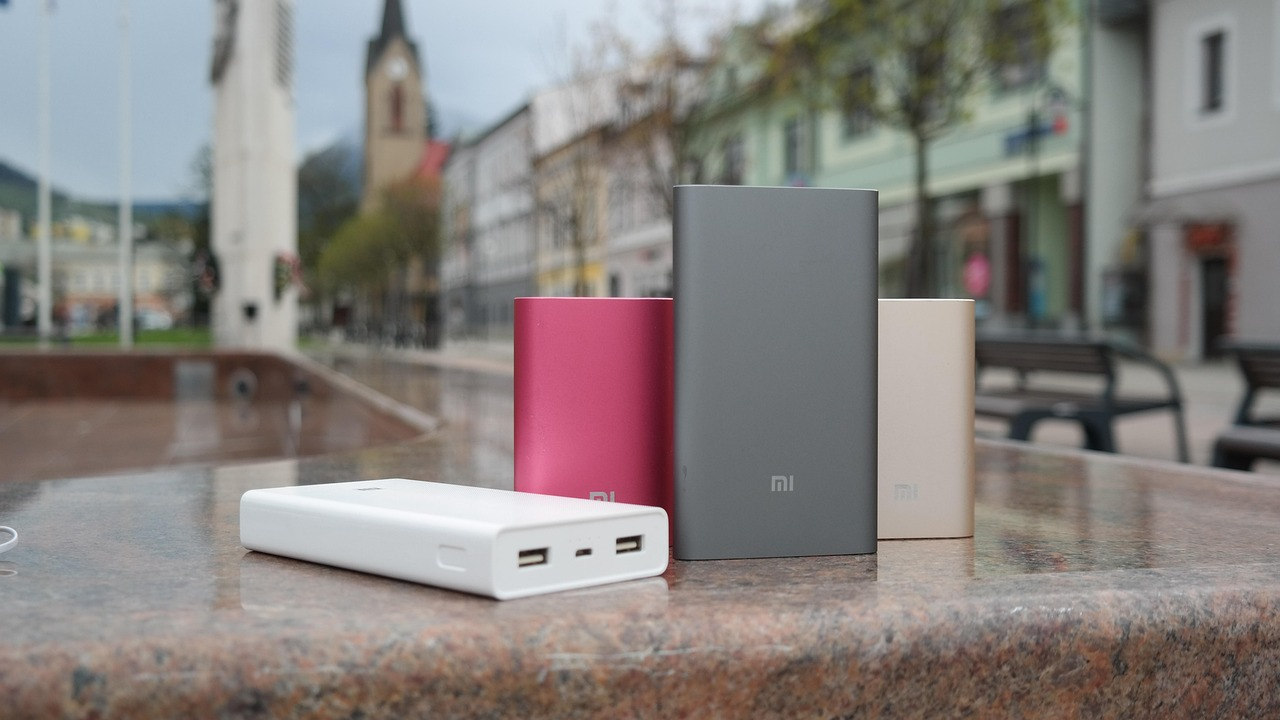
Featured photograph: Pixabay photo by jjur, used under the Pixabay Content License. Illustrative photograph; it does not establish airline approval, battery capacity or charging performance.