
Last updated: October 7, 2026
A museum pass can save money and still make a short trip worse. The arithmetic may demand four major visits in 48 hours, while the traveler actually wants two museums, a long lunch, and enough attention left to remember what they saw.
This city-break model compares Paris, Berlin, and Amsterdam using current prices and rules from official sources. It does not ask which pass has the longest inclusion list. It asks whether your realistic two- or three-day plan contains enough paid, included visits to recover the pass price without turning the trip into a race. This is deliberately narrower than our Europe-wide museum-pass guide: the goal here is short-trip break-even math for these three cities.
How we checked this
We use official pass, museum, and city-tourism pages for the prices and rules below. The three screenshots are historical evidence captures rather than freshness claims. Where a visitor-specific price or inclusion was not sufficiently clear, we leave it out of the savings total instead of filling the gap with a reseller estimate.
Start with the trip constraints, not the pass catalog
Write down the museums you would visit without a pass. Then add opening days, reserved timeslots, travel between sites, and the hours when you still enjoy looking at art. Only after that should you total admission prices.
Four constraints decide most short-trip purchases:
- Duration: some cards run for consecutive hours, while some museum passes use consecutive calendar days.
- Eligibility: age, residence, disability, student status, free Sundays, and differentiated pricing can change the point-to-point total.
- Coverage: temporary exhibitions, transport, airport trains, tours, and reservation fees may follow separate rules.
- Capacity: a pass does not manufacture a sold-out timeslot or remove the physical cost of another two-hour museum.
Use the pass price as a hurdle, not a budget. If your planned admissions barely clear it, paying separately preserves flexibility. A meaningful pass win should survive one skipped attraction.
Three city price cards
| City product | Checked price | Clock | What changes the decision |
|---|---|---|---|
| Paris Museum Pass | EUR 85 / 48 hours | Consecutive hours from first visit | Usually needs a fourth paid included visit |
| Museum Pass Berlin | EUR 32 / 3 days | Three consecutive days | Two standard €14 museums total €28; the third included museum is where the €32 pass starts to win |
| I amsterdam City Card | EUR 90 / 48 hours | Consecutive hours from activation | Transport, cruise, and extra attractions must be genuinely useful |
Paris: the pass becomes convincing on visit four
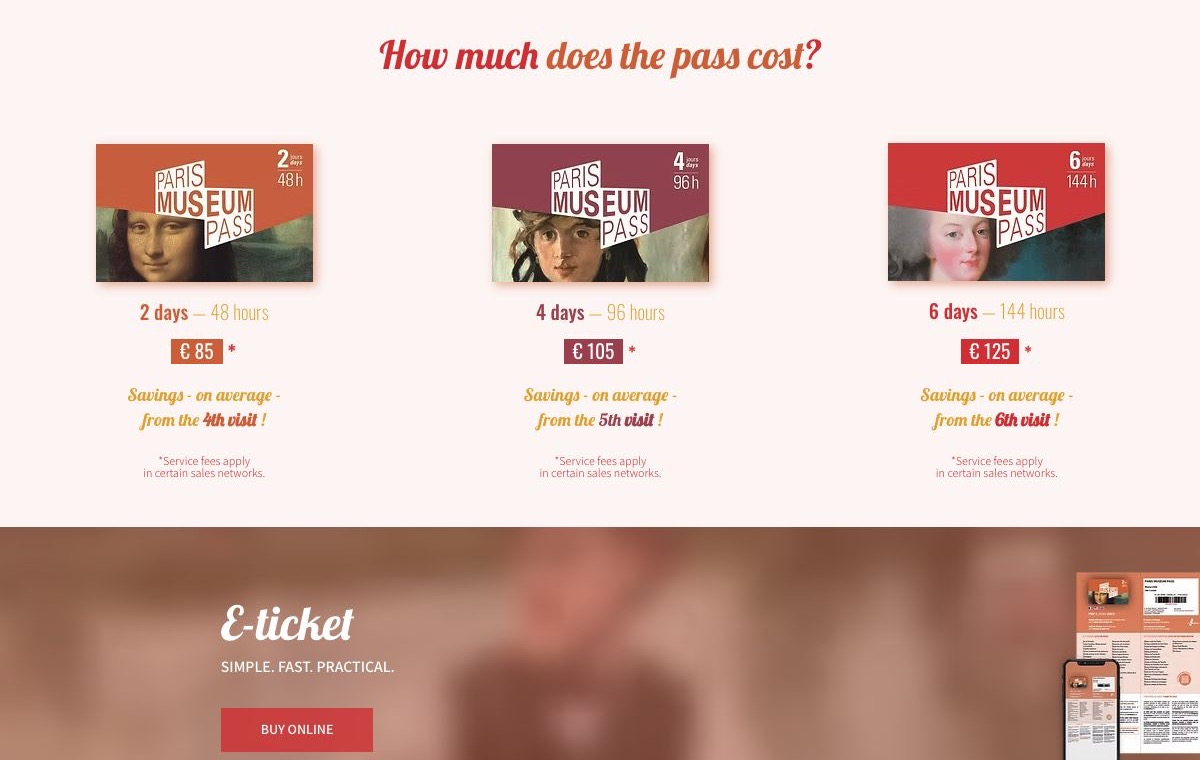
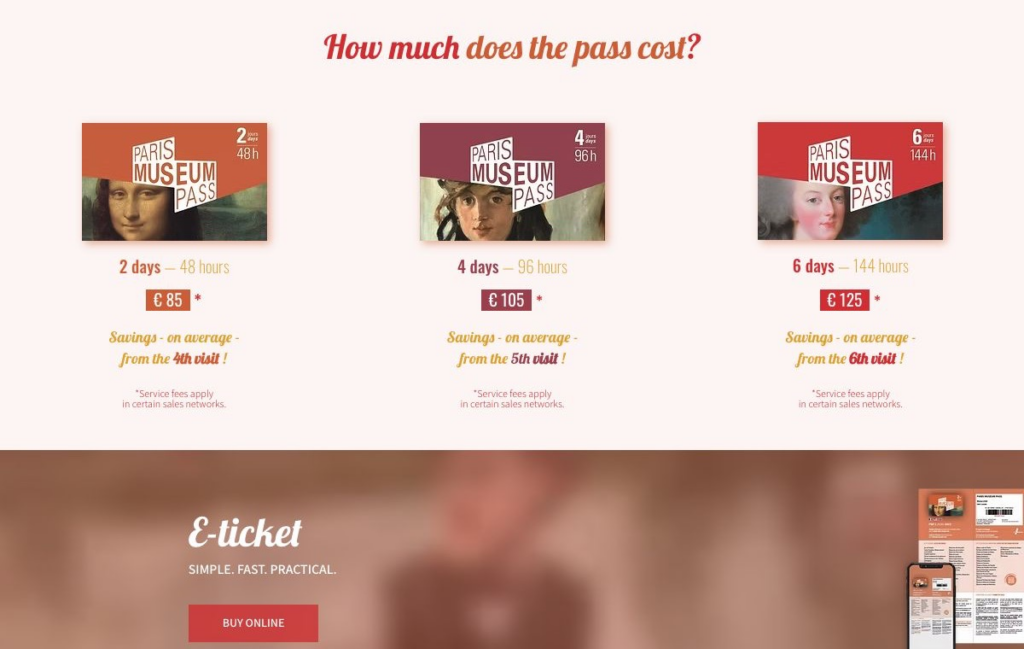
The official Paris Museum Pass site listed EUR 85 for 48 hours, EUR 105 for 96 hours, and EUR 125 for 144 hours. Validity begins with the first visit and runs by the hour. The pass allows one admission to each included site, and its own guidance says the 48-hour product saves money on average from the fourth visit.
That claim fits the current price shape. The Louvre’s official 2026 sheet lists a EUR 32 rate for the relevant full-price category, but eligibility and EEA status matter. Musée d’Orsay lists EUR 16 online, while the Arc de Triomphe is EUR 16 in low season and EUR 22 in high season under the official 2026 schedule.
Those three verified high-season admissions total EUR 70. A fourth included attraction needs a current standalone price above EUR 15 before the EUR 85 pass wins on admission alone. In low season, the hurdle rises because the Arc is cheaper. The pass can still be useful for convenience, but convenience should not be disguised as a cash saving.
Berlin: low hurdle, but check the exhibition
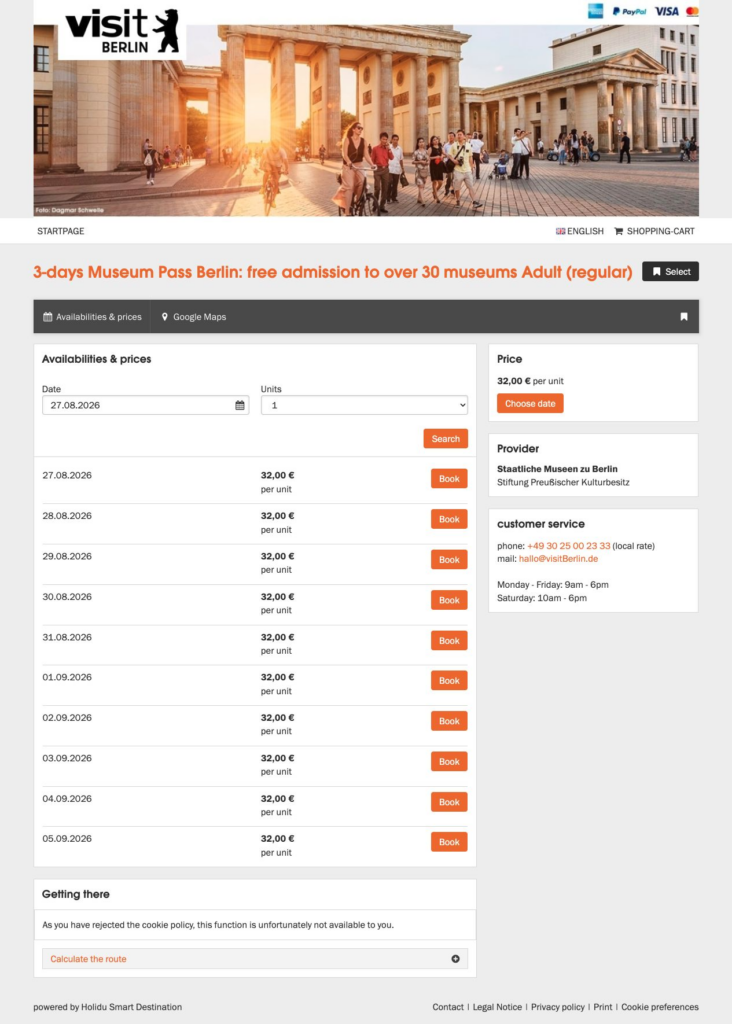
The official Museum Pass Berlin costs EUR 32 for three consecutive days and covers more than 30 museums. For an apples-to-apples comparison, the Neue Nationalgalerie collection ticket is EUR 14; its EUR 20 museum ticket includes all exhibitions. Regular Alte Nationalgalerie admission is also EUR 14, while some special exhibitions can require an additional surcharge.
Two standard EUR 14 museum visits total EUR 28, so the EUR 32 pass still loses by EUR 4. The official pass page itself says the saving starts by visiting three museums. That is the cleaner break-even rule: buy it when a third included museum is genuinely planned, not because one venue’s all-exhibitions ticket happens to cost more.
Special exhibitions can break the neat calculation. The official pass page warns that an additional ticket and timeslot are required for some exhibitions. Neue Nationalgalerie also offers a free Art4All window on the first Thursday from 16:00 to 20:00. A traveler whose dates match that window may be better off using free entry and buying the other museum separately.
Amsterdam: compare Total Experience with the newer Explorer option
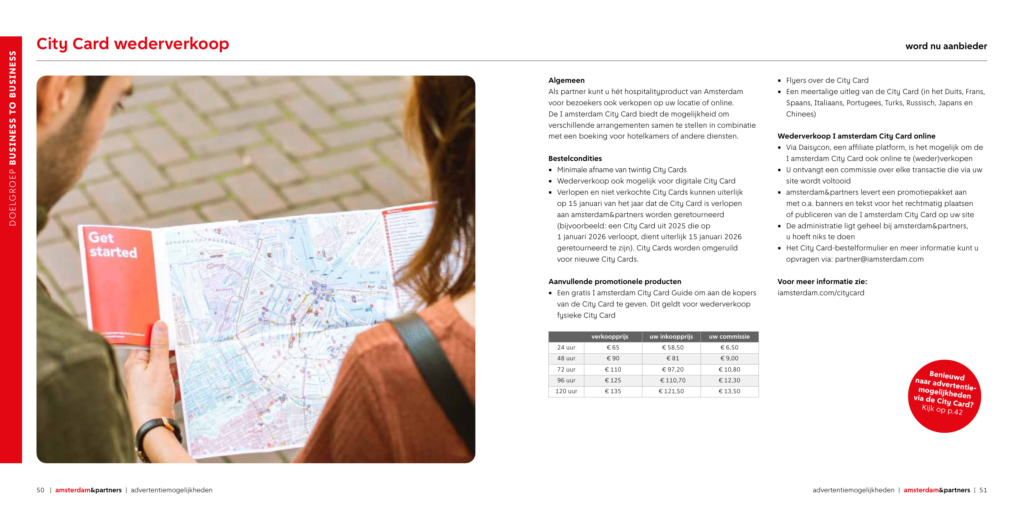
The official 2026 I amsterdam material lists EUR 65, EUR 90, EUR 110, EUR 125, and EUR 135 for the 24, 48, 72, 96, and 120-hour Total Experience card. The live official site currently describes access to 70+ museums, attractions and activities, plus city-wide GVB transport, a canal cruise and bike rental. The current official site also offers an Explorer option: choose 3, 5, or 7 activities from the City Card selection, with no public transport, and use the Explorer card within five consecutive days. The break-even example below refers to the 48-hour Total Experience card, so price the Explorer separately if its fixed-activity model better matches your trip. Airport trains are not included.
This is not a pure museum pass, so comparing it only with museum tickets understates its possible value. The opposite mistake is counting a bike rental, cruise, and unlimited trams at full retail when you would have walked and skipped the boat.
Two official itinerary examples provide a useful floor: one included experience was shown at EUR 25 and an included walking tour at EUR 29. Together they create EUR 54 of planned value. A 48-hour card still needs EUR 36 from additional included museums, transport, cruise, or rental before it reaches EUR 90. If those extras were not already in your itinerary, they are not savings.
Day-by-day scenario 1: focused Paris weekend
Day one is the Louvre in the morning and a long walk afterward. Day two is Musée d’Orsay followed by the Arc de Triomphe at sunset. The verified high-season ticket total is EUR 70 for the relevant full-price Louvre visitor. The 48-hour pass costs EUR 85.
Pay separately. Adding a fourth monument solely to recover EUR 15 turns a focused trip into a collection exercise. The pass becomes more persuasive only when the fourth visit was already wanted and fits the route.
Day-by-day scenario 2: three-day Berlin museum trip
Day one is Neue Nationalgalerie’s collection. Day two is Alte Nationalgalerie. Day three contains another included museum from the current pass list. The first two standard admissions total EUR 28 against a EUR 32 pass, so the third museum is what pushes the pass into savings.
Buy the pass if the third museum is real, not filler, and the exhibitions you want are included without material surcharges. Pay separately if your visit overlaps a free-entry window or the main reason for going is a special exhibition requiring another ticket.
Day-by-day scenario 3: mixed Amsterdam city break
Day one contains the EUR 29 walking tour and one museum. Day two contains the EUR 25 included experience, a canal cruise, and several GVB trips. The two verified priced activities contribute EUR 54 toward the EUR 90 card.
Do not buy until the museum, cruise, and transport you would independently purchase add at least EUR 36. If they do, the card may fit this mixed itinerary better than a museum-only product. If you prefer walking and one major museum per day, separate tickets are the cleaner choice.
The energy cost belongs in the calculation
A pass rewards consumption. A good city break rewards attention. Those goals overlap only up to a point.
Give each major museum a realistic time block, including security, cloakroom, orientation, food, and transport. Two large collections in one day can be reasonable for an enthusiast and miserable for everybody else. Our guide to planning a museum day without burnout treats attention as a limited budget for exactly this reason.
Apply a skip test: remove the least important paid visit. If the pass still wins, the saving is resilient. If it loses, you are buying an obligation disguised as flexibility.
Reservations can matter more than queue language
A pass and a reservation solve different problems. The pass establishes whether admission is included; the reservation establishes whether you can enter at a useful time. Do not read “fast access” or “skip the ticket desk” as a guarantee that a sold-out attraction will admit you.
Build the city break around the hardest reservation first. In Paris, confirm the current booking instructions for each major site before activating the pass. In Amsterdam, the official FAQ explains that some attractions require timeslots and that booking one does not activate the City Card. That is useful: you can reserve before the validity clock starts. In Berlin, check whether the exhibition you care about needs a separate timeslot or surcharge even when the underlying museum is included.
The clean sequence is:
- List only attractions you would pay to visit independently.
- Verify that each exact collection or exhibition is included.
- Reserve the constrained slots before arranging flexible visits.
- Place nearby museums together, leaving a real meal and travel buffer.
- Activate an hour-based card at the first included use, not automatically at arrival.
This sequence protects both kinds of value. It prevents a nominal saving from collapsing because the desired exhibition carries a supplement, and it avoids wasting the first hours of a card on airport transfer, hotel check-in, or a free evening walk.
Best match by city and traveler
Choose the Paris Museum Pass when four or more included paid visits fit naturally inside the chosen hour window and your eligibility does not already make major sites free or cheaper. Skip it for a Louvre-and-Orsay weekend with one optional monument.
Choose Museum Pass Berlin when at least two full-price museums plus a third included venue are genuinely planned. Check special exhibitions and free Thursday windows before paying.
Choose the I amsterdam Total Experience card when the trip combines museums with GVB transport, a canal cruise, and another included activity. Compare the Explorer option when you want a smaller fixed number of included activities and do not need public transport. Skip both when the itinerary is mostly walking, one headline museum, and neighborhoods.
For another way to test the arithmetic, use our broader Museum Pass Europe guide and the general pass and bundle break-even framework. Recheck official prices, inclusions, closures, and reservations on the day you buy.