
Last updated: October 11, 2026
Train travel in Europe sounds simple from a distance: buy a pass, jump on board, and watch the continent unfold. The reality is better than that in some ways and more complicated in others. A first trip usually goes wrong in predictable places: buying the wrong ticket type, underestimating seat reservation rules, packing like you are flying long-haul, or choosing routes that look romantic on a map but waste half the day in transfers.
A first European rail itinerary in 2026 should focus on tradeoffs, not fantasy. Trains can be a convenient way to travel between city centers, avoid airport transfers and make journeys part of the trip. But the best fare depends on the exact route, operator, booking conditions and whether compulsory reservations are included.
Optional video: European train travel explained (Spanish)
Prefer to see a trip explained step by step? Watch Mundukos’s Spanish-language guide to European rail travel on YouTube. This is an optional third-party perspective; use the up-to-date railway sources below for ticket prices, reservation requirements and service rules. Subtitles may be available on YouTube.
Quick answer
For most first-timers, European train travel still makes excellent sense in 2026 on medium-distance routes — not continent-spanning wish lists. Interrail can be worth it when you plan several longer rail days and want flexibility. Point-to-point advance tickets often win if the itinerary is fixed, especially on routes where early booking produces aggressive promo fares. The best first trip usually has fewer cities, smarter seat reservations, and luggage light enough that station changes do not become the hardest part of the day.
For related planning, combine this with the best carry-on packing list 2026 and museum pass Europe 2026 guide.
Interrail vs point-to-point tickets: compare total costs
Which Interrail Pass should you compare?
An Interrail Global Pass is available in flexible travel-day versions and continuous versions. The right choice depends on how many days you actually board covered trains, not how many days you spend abroad. Pass prices depend on age category, travel class and the current offer; check the official price for your own dates instead of relying on an undated euro estimate.
| Pass format | How it works | When to consider it |
|---|---|---|
| 4 travel days within 1 month | Use covered trains on four chosen days within the validity month | A short trip with several longer rail moves |
| 7 travel days within 1 month | Seven chosen travel days; reservation fees remain extra | A multi-country itinerary with frequent train transfers |
| 15 travel days within 2 months | Fifteen travel days spread across a longer trip | Extended touring with many intercity journeys |
| Continuous pass | Travel on covered services throughout the selected validity period | Frequent travel nearly every day; check available durations |
See the official Global Pass options and live prices and use our Interrail / Eurail pass calculator to compare a real itinerary. One Country Passes can suit a single-country trip, but you cannot use a One Country Pass in your own country of residence; eligibility and the Global Pass’s rules for travel in your home country matter. Since September 2026, new passes are sold under the Interrail brand to European and non-European residents. Check the official September 2026 update and the home-country travel rules for your residence.
What to add to the cost of a pass: real reservation examples
Interrail is not automatically a ticket for every train. On covered high-speed routes, a separate seat reservation is often compulsory, and fares can be quota-controlled. The following are published Standard / second-class passholder reservation examples from Interrail’s official schedule, checked in October 2026. They are not point-to-point ticket prices and may change before travel.
| Covered service and route | Interrail seat reservation example | Important condition |
|---|---|---|
| Eurostar: London–Paris | €35 Standard | Compulsory; passholder places may be limited |
| Eurostar: Paris–Brussels | From €27 Standard | Compulsory on Eurostar trains |
| Eurostar: Brussels–Amsterdam | From €22 Standard | Compulsory on Eurostar trains |
| TGV: Paris–Barcelona | €35, on listed TGV services | Compulsory; verify the specific train and operator |
| Trenitalia Frecciarossa (Italy) | Typically €13 Standard | Compulsory; Italo is a separate, non-covered operator |
| Railjet: Vienna–Budapest | About €3 for optional second-class reservation | Check the precise train; some services require reservations |
Sources: Interrail international fees, domestic fees (including Frecciarossa) and Eurostar pass fares. Interrail self-service adds €2 per passenger, per train when you book through that channel; fees and minimum Eurostar prices are subject to availability. For final prices and quotas, search your precise journey on the official reservation service. Operators can also sell reservations directly.
How to compare the total cost
Suppose a pass costs €300 and the required reservations for your itinerary total €85. Your rail cost is €385 before any optional upgrades. If actual advance point-to-point fares for exactly the same trains total €340, the direct tickets save €45. If they total €460, the pass-plus-reservations saves €75. These figures are illustrative arithmetic, not real fares: use your own dates, passenger ages, trains and ticket conditions before buying.
Compare like with like: departure time, train operator, cancellation conditions, total journey length, number of passengers and whether every leg accepts the pass. Interrail may be valuable for flexibility, but mandatory reservations and availability can substantially limit spontaneity on popular international routes.
Country-by-country rail basics
France — TGV and SNCF
France has one of the best high-speed networks in Europe. TGV trains connect Paris to Lyon, Marseille, Bordeaux, and Strasbourg efficiently. Seat reservations are mandatory on many TGV services, so you do need to think beyond the pass itself. Point-to-point tickets booked well ahead via SNCF Connect or similar platforms can be dramatically cheaper than late flexible fares. Book for specific trains, not open-dated. Night trains and selected international routes are worth checking when a daytime rail day would otherwise be long or expensive.
Italy — Trenitalia and Italo
Italy has two major high-speed brands, but their pass rules differ. Trenitalia Frecciarossa services participate in Interrail and require a separate seat reservation; Italo is not included, so an Italo journey needs its own point-to-point ticket. Compare the total price for the same departure and booking terms on trenitalia.com and italotreno.com rather than treating the companies as interchangeable under a pass. Regional trains run by participating operators are often pass-valid without seat reservations, but some separate tickets must be validated or activated according to the operator’s rules.
Spain — Renfe
Spain’s high-speed network includes Renfe AVE and its separate budget brand Avlo. Participating AVE services can be used with an Interrail Pass, usually with a mandatory reservation; Avlo is not covered and requires its own ticket. Booking windows and fare rules depend on the specific route and service, so avoid assuming a universal 60-day opening period. Compare eligible passholder reservations against direct tickets via Renfe, and verify train acceptance in the current Interrail Rail Planner before deciding.
Germany — Deutsche Bahn (DB)
Germany’s system is one of the most flexible for pass users. ICE and IC trains often have optional seat reservations, which is part of why Germany feels easier than France or Spain for more spontaneous travel. Regional trains are usually reservation-free and useful for shorter scenic or secondary-city hops. DB Navigator is still the best app to have on hand for real-time platform and disruption information.
Austria and Central Europe
ÖBB covers Vienna, Salzburg, Innsbruck, and strong cross-border connections to Germany, Hungary, Czech Republic, and beyond. Reservations are optional on many routes but still worth considering on busy travel weekends. Night trains operated by ÖBB Nightjet are one of the strongest overnight options in Europe and are especially useful when you want to save a hotel night without destroying the next day.
Switzerland
Swiss trains are expensive without a pass, but they are also punctual, legible, and one of the easiest systems for first-timers to trust. The Swiss Travel Pass can be attractive if Switzerland is a major part of the trip rather than just a one-leg transit country. Scenic routes such as the Glacier Express and Bernina Express are worth knowing, but they work best as one memorable rail flourish inside an otherwise practical route.
Four routes that work well for a first trip
Route 1: London → Paris → Brussels → Amsterdam — a worked 8-day trip
A reproducible planning example for 14–21 November 2026: eight calendar days, seven hotel nights, three international train journeys. This is an editorial itinerary, not a claim that specific trains, tickets or hotel rooms have been checked or reserved for those dates. Verify live schedules and inventory before paying. Start in London and finish in Amsterdam; a return journey to London is not included.
| Date | Plan and rail movement | Sleep in |
|---|---|---|
| Sat 14 Nov | Arrive in London; settle in, short neighborhood walk. | London (night 1) |
| Sun 15 Nov | Full day in London, no intercity train. | London (night 2) |
| Mon 16 Nov | London St Pancras International → Paris Gare du Nord. Direct Eurostar, roughly 2 h 16 min on advertised fastest schedules; leave time for the UK exit and Schengen entry checks before boarding. | Paris (night 3) |
| Tue 17 Nov | Full day in Paris. Plan nearby sights by neighborhood rather than cross-city transfers. | Paris (night 4) |
| Wed 18 Nov | Paris Gare du Nord → Bruxelles-Midi/Brussel-Zuid. Direct Eurostar, as little as about 1 h 22 min; station names refer to the same Brussels South station, not Brussels-Central. | Brussels (night 5) |
| Thu 19 Nov | Bruxelles-Midi/Brussel-Zuid → Amsterdam Centraal. Direct Eurostar, as little as about 1 h 52 min. Book the operator and class actually chosen. | Amsterdam (night 6) |
| Fri 20 Nov | Full Amsterdam day; leave museums or canal visits for this no-transfer day. | Amsterdam (night 7) |
| Sat 21 Nov | Travel home from Amsterdam; onward transport is outside this rail comparison. | — |
Operator evidence: Eurostar publishes the London–Paris, Paris–Brussels and Brussels–Amsterdam routes and indicative fastest times. Check the exact recommended station arrival time for your ticket: travel to or from London requires pre-departure security and border formalities (allow around 75 minutes at St Pancras for Standard/Plus), while continental Eurostar services generally have shorter recommended lead times. Confirm current passport and entry-document requirements separately.
How to compare costs for this trip
The three rail travel dates are 16, 18 and 19 November. A four-travel-day Interrail Global Pass would therefore leave one travel day unused unless you add a separate eligible trip. Buying a pass never removes compulsory Eurostar reservation costs or passholder-seat quotas.
| Item, Standard class, one adult | Passholder reservation, indicative | Individual-ticket comparison |
|---|---|---|
| 16 Nov: London → Paris | From €35 | Check the live Eurostar one-way total for this date |
| 18 Nov: Paris → Brussels | From €27 | Check the live Eurostar one-way total for this date |
| 19 Nov: Brussels → Amsterdam | From €22 | Check the live Eurostar one-way total for this date |
| Passholder reservations subtotal | From €84 | Not applicable |
| Interrail self-service booking fees if all three booked there | €6 (€2 × 3 trains) | Check any booking-site service fees |
| Total rail-ticket decision | Current four-day pass price + at least €90 | Sum of three real one-way tickets for the same departures |
Decision rule: get a live quote for a four-day Interrail Pass for your passenger category (call it P) and the three individual one-way tickets at checkout (call their sum Q). The pass option is at least P + €90 through Interrail self-service at the minimum fees above. If Q is lower than P + €90, buy individual tickets on cost grounds. If Q is higher, check passholder seat availability and any extra charges before deciding the pass is cheaper. These are minimum published passholder reservation examples, not confirmed November prices; the tickets themselves have not been quoted for these dates. Different booking channels and fare availability change the result.
Where to check and compare: use Eurostar for matching direct-ticket quotations, the current Interrail pass price and passholder-seat availability for exactly the three travel dates. Compare the same passenger, travel class, change/refund rights and departure times. Record the date on which you see each quote. Choose the option with the better fully comparable total, considering reservation availability, flexibility and the journey you actually plan to take.
Route 2: Italy by train (8–12 days)
Milan → Florence → Rome → Naples → return via Rome or fly home. Or add Venice for a northern extension. No pass is needed for many travelers here if you are happy to book direct and early. Italy is one of the clearest cases where operator competition can make point-to-point tickets very attractive.
Route 3: Central Europe loop (10–14 days)
Vienna → Budapest → Prague → back to Vienna or onward to Munich. Rail connections make this an appealing route, and some services offer more reservation flexibility than compulsory-reservation Western European high-speed trains. Do not assume Interrail is automatically cheaper in Central Europe. Compare the participating operators, advance fares, route restrictions and the actual passholder reservation rules before choosing a pass.
Route 4: France in depth (7–10 days)
Paris → Lyon → Avignon or Marseille → Nice → return to Paris via Lyon. Alternatively: Paris → Bordeaux → Biarritz → San Sebastián by bus or train for a France-Spain mix. The southeastern triangle is one of the strongest France rail itineraries for food, weather, and city variety. As usual with France, compare an early direct booking against any pass logic before assuming one wins.
Our starting recommendation: For a first 7–10-day trip, Route 1 (London–Paris–Brussels–Amsterdam) has convenient city-center links, but Eurostar departures to or from London require airport-style advance checks and compulsory reservations, so budget extra time and verify availability. Route 3 (Central Europe) can offer more flexibility, but the financial case for Interrail still needs to be calculated from your dates and actual operators. Neither route guarantees that a pass or individual tickets are cheaper.
Booking platforms: where to actually buy tickets
Direct railway operators first. For a fixed itinerary, obtain a point-to-point quote from the actual operator: SNCF Connect (France), Trenitalia or Italo (Italy; not Interrail-valid), Renfe (Spain), DB (Germany), and ÖBB (Austria). Booking direct may avoid agency charges and can simplify changes, but it is not guaranteed to be cheaper on every route.
Comparison sites. Trainline and Rail Europe can be helpful for checking multiple operators and cross-border options. Coverage, prices, reservation availability and service fees differ; compare the total at checkout against the operating railway’s price and rules.
Official pass and reservation information. Use Interrail to verify Global or One Country Pass eligibility and current offers, and Interrail’s reservation guide to establish how to book each passholder seat. Passes may also be sold by authorized distribution partners, so the official website is not the only legitimate sales channel.
Which trains accept Interrail, and which require reservations?
| Service | Pass acceptance | Reservation rule to check |
|---|---|---|
| Eurostar international | Covered Eurostar routes, subject to passholder inventory | Compulsory and extra-cost; reserve early |
| SNCF TGV (France) | Covered services | Compulsory on TGV; fees and availability vary |
| Trenitalia Frecciarossa (Italy) | Covered | Compulsory seat reservation at extra cost |
| Italo high-speed (Italy) | Not included in the Interrail Pass network | Buy a separate Italo ticket |
| Renfe AVE (Spain) | Covered participating services | Compulsory passholder reservation where accepted |
| Renfe Avlo (Spain) | Not included in current Interrail pass coverage | Buy a separate Avlo ticket |
| DB ICE / IC (Germany) | Covered participating services | Often optional; cross-border and peak-season exceptions |
| ÖBB Railjet (Austria / Central Europe) | Covered participating services | Often optional; verify international exceptions |
| Regional trains | Only services from participating operators | Often reservation-free; check each service |
| ÖBB Nightjet | Covered services, with additional charges | Mandatory accommodation / seat booking; prices vary |
Do not assume every train run by a familiar national brand is included. Interrail’s 2026 Pass Guide specifies participating companies; check the current reservation rules for the exact connection and service date.
Practical checklist before boarding
Travel with luggage you can lift onto a train and manage through station changes. Double-check the exact departure station, operator, platform and train number. Keep both the valid ticket or activated pass and any compulsory seat reservation accessible offline. Consult your operator for ticket activation or validation rules; some regional systems work differently from high-speed services.
Arrival times are operator-specific. Do not use one blanket 15–20-minute rule. For Eurostar trains to or from London, security and border checks happen before boarding: Eurostar recommends 75 minutes at London St Pancras for Standard / Plus and 75–90 minutes at Paris Gare du Nord. Other stations, ticket types and services have different guidance. Check the official recommendation for your exact departure, especially with luggage or accessibility needs.
For ordinary domestic trains with no airport-style checks, allow enough buffer for transfers, finding the platform, disruption alerts and boarding conditions. A charged phone and a backup power source are useful, but do not assume every carriage has working sockets.
Four practical trade-offs to consider
Reservation fees erode pass value faster than most comparisons show. The pass price does not include compulsory reservations on services such as Eurostar, TGV, Trenitalia Frecciarossa and participating AVE trains. For example, three Eurostar passholder reservations — London–Paris (€35), Paris–Brussels (from €27) and Brussels–Amsterdam (from €22) — add up to at least €84 per Standard-class passenger before booking fees. Booking all three through Interrail self-service adds another €6, for at least €90 in reservations and administration fees. These are illustrative published passholder rates, not train tickets; check actual availability and fares for your departures.
The romantic route problem is real and expensive. Some of Europe’s most-cited rail experiences, including the Glacier Express, the Bernina Express, and slow Alpine crossings, can be genuinely good. They are also rarely the right backbone for a first-time budget trip. Build one scenic flourish into an otherwise practical route, not the other way around.
Night trains work only if you sleep on trains. OBB Nightjet is frequently recommended because the economics look good on paper: one train fare replaces a hotel night and a daytime journey. That is true, but it assumes you arrive rested enough to use the next day. If you sleep poorly in motion, an overnight train can leave you exhausted in a new city with a full sightseeing day ahead.
Station geography matters more than most itineraries acknowledge. Paris has multiple major train stations, Milan has more than one important long-distance station, and London departures vary by route. Arriving at one station and departing from another on the same morning with luggage is not a minor detail. Budget real transfer time for inter-station moves when they appear in your itinerary.
Common mistakes first-time European rail travelers make
Assuming the pass is always best value. A London–Paris–Brussels–Amsterdam circuit is the classic example where early point-to-point fares can beat a pass once you add mandatory reservation fees. Compare the complete itinerary instead of assuming a pass is always the better choice.
Trying to do too many long travel days. Long journeys use up sightseeing time even when you travel in the morning or evening. Two four-hour journeys do not necessarily take two entire days, but add realistic time for transfers, luggage and check-in. For many first-timers, planning no more than three substantial intercity moves in a week creates a more relaxed trip.
Forgetting local validation or activation rules. Some regional tickets still need validation before boarding, especially in systems where paper or non-seat-specific tickets are in play. Always check the operator rule for that route instead of assuming every ticket behaves like an airline boarding pass.
Packing a large checked-bag mindset. On Eurostar and TGV, there is no checked baggage — your bags go in the overhead rack or at the end of the carriage. A 25-kg suitcase is manageable on one train; it becomes a liability on a 6-train trip with tight connection windows.
Choosing routes by romance alone. Some of Europe’s most famous rail experiences are extraordinary, but they are not usually the right backbone for a budget-first or first-time itinerary. Build one scenic flourish into an otherwise practical route instead of letting the fantasy product define the whole trip.
Night trains: the underused option
Overnight trains can save daylight travel time and sometimes replace a hotel night, but this is not an automatic saving. Check the current ÖBB Nightjet network for your travel date rather than relying on a route list that may change with engineering works or annual timetable updates. A seat, couchette and private sleeper are not equivalent products: compare the exact accommodation supplement, comfort, arrival time and refund conditions against a daytime ticket and hotel. All passholders need the relevant overnight reservation or accommodation booking where required, and the pass itself does not pay for a berth.
Final recommendation
Build smaller than your instinct tells you. Pick a route where the cities logically connect, compare pass-plus-reservation totals against live ticket quotes for your dates, and keep your luggage light enough that every transfer still feels manageable. That is the version of train travel people end up loving.
For next-step planning, revisit the carry-on guide and the museum pass Europe guide if the trip will mix rail days with city-heavy sightseeing.
FAQ
Is Interrail worth it in 2026?
It can be, but only after comparing a complete itinerary. List every travel day, determine whether each train accepts the pass, add compulsory reservation costs and check passholder seat availability. Compare that total against point-to-point tickets for the same dates and flexibility. No blanket rule that passes are better in Central Europe or worse in Western Europe replaces this calculation.
How far in advance should I book European train tickets?
For France, Italy, and Spain, earlier usually helps a lot on popular high-speed routes. For Germany and Austria, the pressure is often lower unless you are traveling on peak weekends or holiday periods. Eurostar rewards booking well ahead more consistently than most domestic routes. The clean rule is simple: book earlier where mandatory reservations and yield pricing dominate.
Do I need seat reservations with an Interrail pass?
On many services, yes. Eurostar, TGV, participating Trenitalia Frecciarossa and Renfe AVE trains often require separate paid reservations even with a pass. Italo and Avlo are not covered by Interrail, so you need ordinary tickets for those services, not a passholder reservation. German ICE reservations are often optional, but cross-border and seasonal requirements vary; check the exact service.
What is the cheapest way to travel between major European cities by train?
Compare the train operator’s final price with retailer quotes for the same departure, class and ticket conditions. SNCF Connect, Trenitalia, Italo, Renfe and Deutsche Bahn are useful starting points for direct quotes. Promotional fares can be excellent, but always compare change, cancellation, baggage and service-fee rules before paying.
Is it cheaper to fly or take the train in Europe?
Flights often appear cheaper on longer routes, but the true cost includes airport transfer time, baggage fees, and security overhead. On routes under roughly four hours by high-speed train, the door-to-door comparison often favors rail. On longer routes, budget flights can genuinely win on both price and time, especially if the rail option adds reservations and multiple transfers.
What is the best overnight train route in Europe?
There is no universal best route. Check the currently operating ÖBB Nightjet services for your dates, then compare a seat, couchette and sleeper with the cost of a daytime train plus hotel. The strongest choice arrives at a useful time and lets you sleep comfortably enough to enjoy the next day.
Which European countries have the best rail networks for first-time travelers?
France, Italy and Spain offer extensive high-speed connections between major cities, with different rules for passes and seat reservations. Germany’s network offers frequent long-distance and regional services, though punctuality and engineering works can affect connections. Switzerland’s integrated rail system is appealing for scenic trips but merits a separate fare/pass comparison. Austria and neighboring Central European countries suit compact multi-city routes. Choose based on your actual cities and dates rather than a single country ranking.
What is the best website to book European train tickets?
Start with the train operator for final timetable, fare and ticket conditions; use Trainline or Rail Europe as secondary comparison tools if useful. If buying an Interrail Pass, verify current offers and reservation restrictions at Interrail.eu. No single booking site is guaranteed to be cheapest or show every European operator.
Official planning pages worth checking
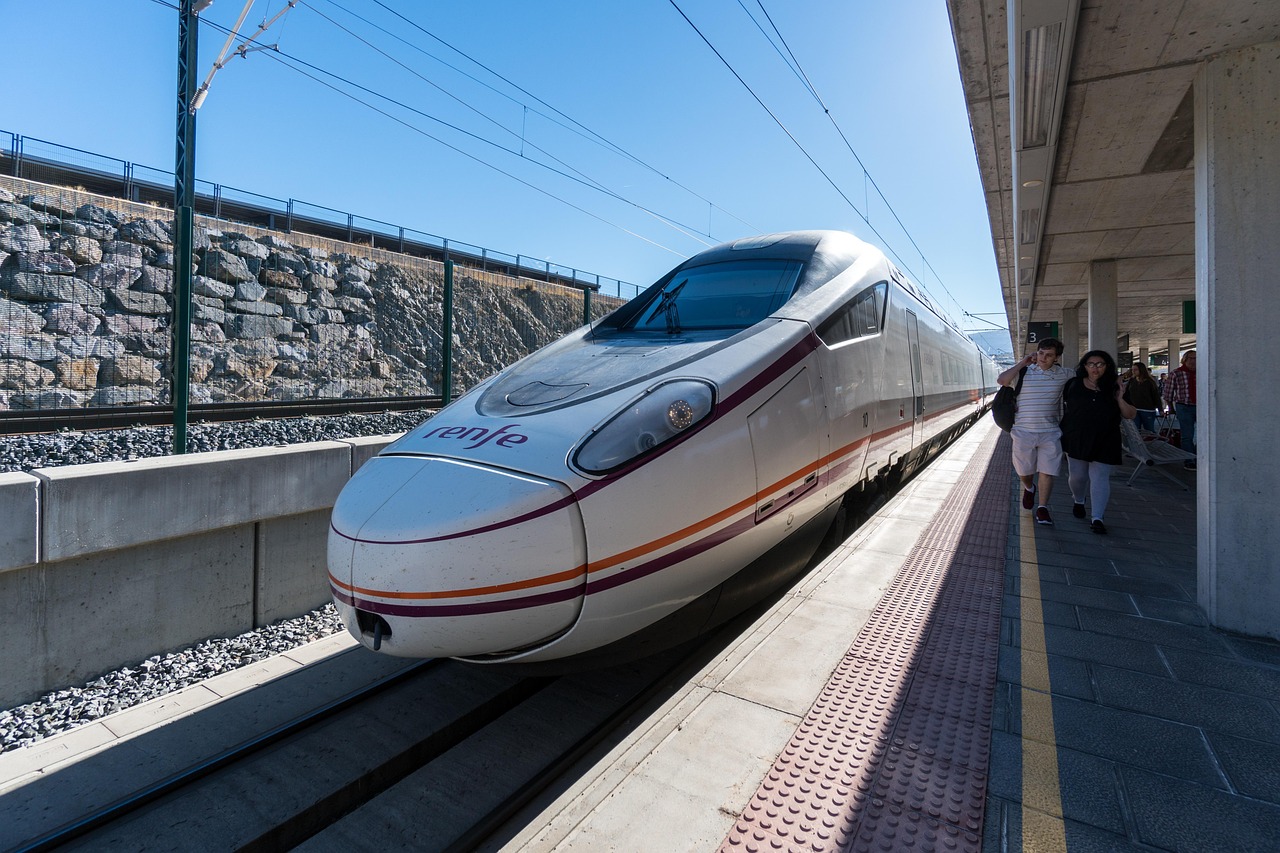
Featured photograph: “High-speed train, Spain, railway” by steven_yu on Pixabay, used under the Pixabay Content License. The photograph shows a Renfe train in Spain and is illustrative of European rail travel.