
Last updated: October 7, 2026
Pass prices, attraction counts, reservations and inclusions can change. Recheck your travel dates and the exact attractions you plan to use before paying.
The London Pass can save money, but not because London lacks free museums. The opposite is true. If your plan is the British Museum, National Gallery, Tate Modern, parks, and neighborhoods, buying a sightseeing pass creates a bill where none was necessary.
The pass starts making sense when your list moves toward the Tower of London, Westminster Abbey, St Paul’s Cathedral, the London Eye, palace entries, cruises, and other paid attractions. The useful question is therefore not “How many museums are included?” It is “How much would my exact paid list cost without the pass?”
How we checked this
We use the live official London Pass pricing, attraction and “how it works” pages, then cross-check individual admission with attraction operators where a public price is available, including Historic Royal Palaces for the Tower of London and St Paul’s Cathedral. We did not treat temporary promo codes as permanent prices, and we did not count free general museum admission as a pass saving.
There is one unavoidable limit: Go City can change both prices and inclusions. An attraction shown today may move between Explorer and All-Inclusive, require a reservation, become seasonal, or leave the product. The arithmetic below is a checked snapshot and a method you can repeat, not a promise about a future travel date.
The answer in one minute
Skip the pass if most of your day is built around free national collections. Choose Explorer when you have two to seven expensive attractions selected and want to spread them across a trip. Choose All-Inclusive only when you can realistically use several paid inclusions on consecutive days without turning London into a race.
| Your actual plan | Best starting point | Why |
|---|---|---|
| British Museum, National Gallery, Tate Modern | No pass | General collection admission is free |
| Two to seven named paid attractions | Explorer | You buy a fixed number of choices and have 30 days after activation |
| Three or more paid sights per day | Check All-Inclusive | Consecutive-day pricing can work when the itinerary is dense |
| One major paid sight plus free museums | Individual ticket | The pass usually adds cost rather than removing it |
What the London passes include in 2026
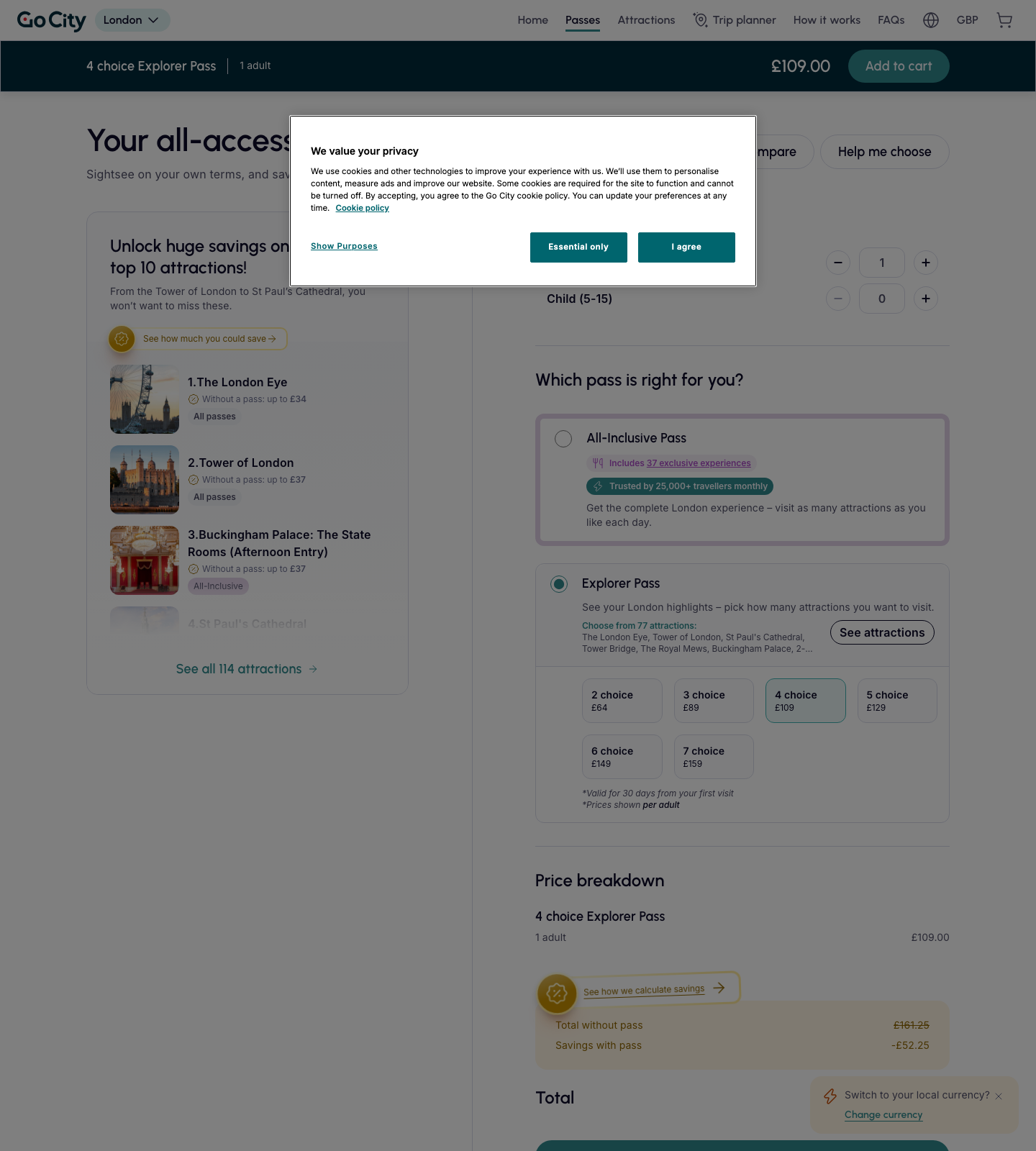
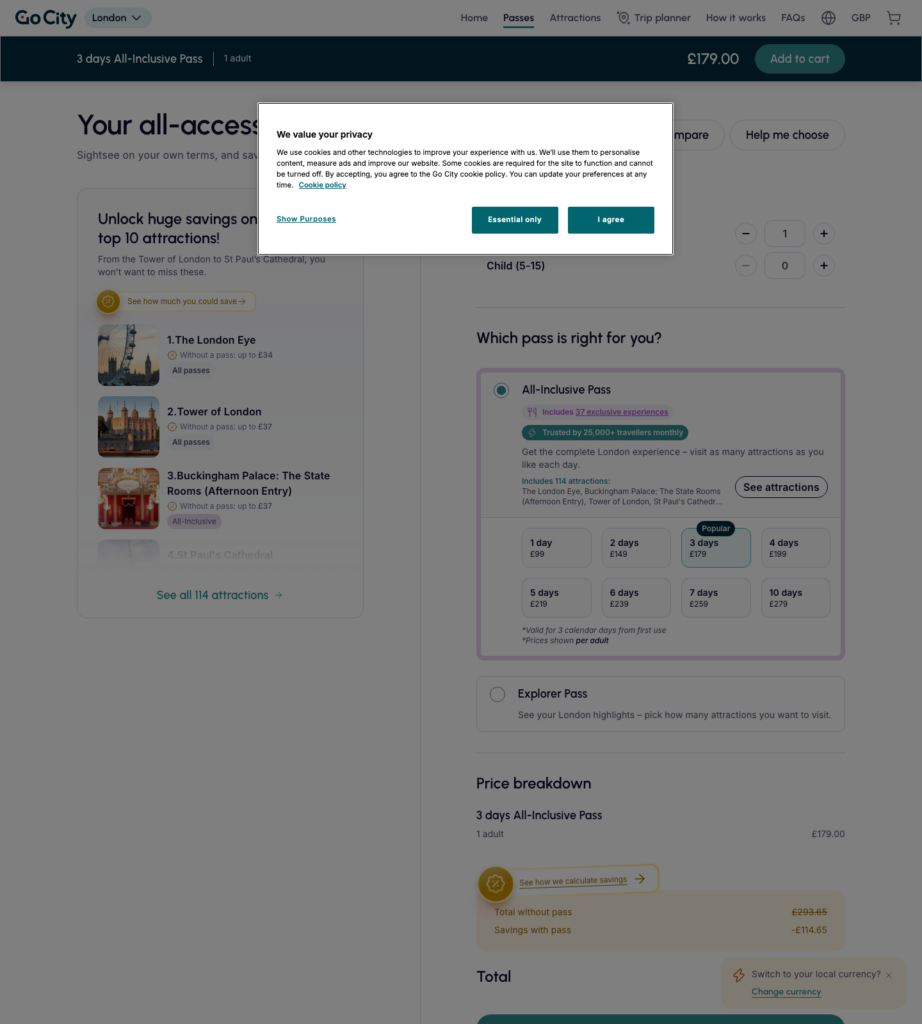
Go City currently sells two different products. The Explorer Pass covers a chosen number of attractions, from two to seven, from a smaller inventory. You do not select the attractions when buying, and the remaining choices can be used over 30 days after the first visit. The All-Inclusive Pass covers a larger inventory for one to ten consecutive calendar days.
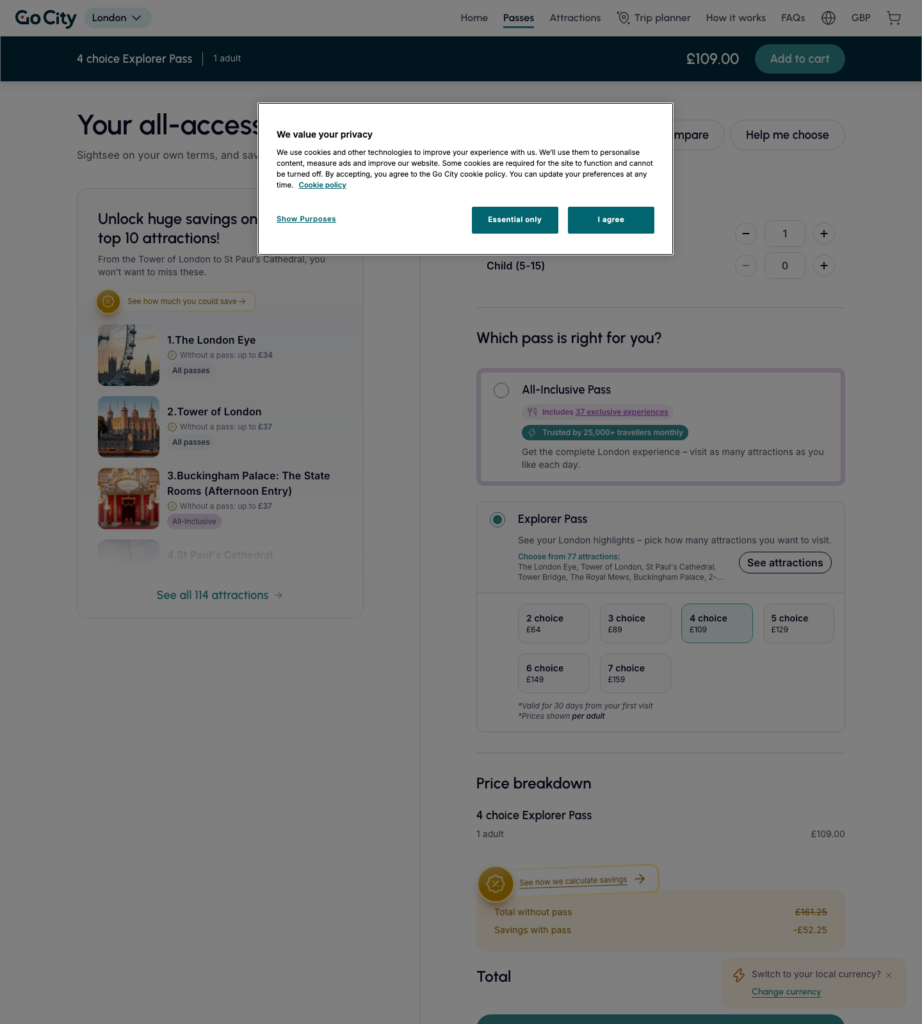
The current official pages show 76 Explorer choices and 112 All-Inclusive attractions, with 36 experiences available only on the full London Pass. The headline list included the Tower of London, St Paul’s Cathedral, Tower Bridge, London Eye, City Cruises, Westminster Abbey, Windsor Castle, Royal Mews, Moco Museum London, and several tours. Some seasonal or premium experiences appear only on All-Inclusive. Inventory is not permanent; confirm every must-see in the official app before buying.
The word “museum” needs careful reading in the attraction list. The pass may cover admission to a paid museum such as Moco Museum London or Florence Nightingale Museum. At a free institution, it may instead cover an audio tour, guided experience, exhibition, IMAX screening, or guidebook. Those products can have value, but the pass is not unlocking the free collection itself. Read the name of the included product, not only the institution beside it.
The 2026 prices used in this comparison
| Pass | Adult price checked | Validity after activation |
|---|---|---|
| Explorer, 2 choices | £65 | 30 days |
| Explorer, 3 choices | £89 | 30 days |
| Explorer, 4 choices | £115 | 30 days |
| All-Inclusive, 1 day | £105 | 1 calendar day |
| All-Inclusive, 2 days | £155 | 2 consecutive calendar days |
| All-Inclusive, 3 days | £199 | 3 consecutive calendar days |
Promotional codes were visible during the check, but the calculations use the displayed pass prices rather than assuming a temporary discount will still exist for your dates.
Three break-even tests
Two historic sites: the current prices are a tie
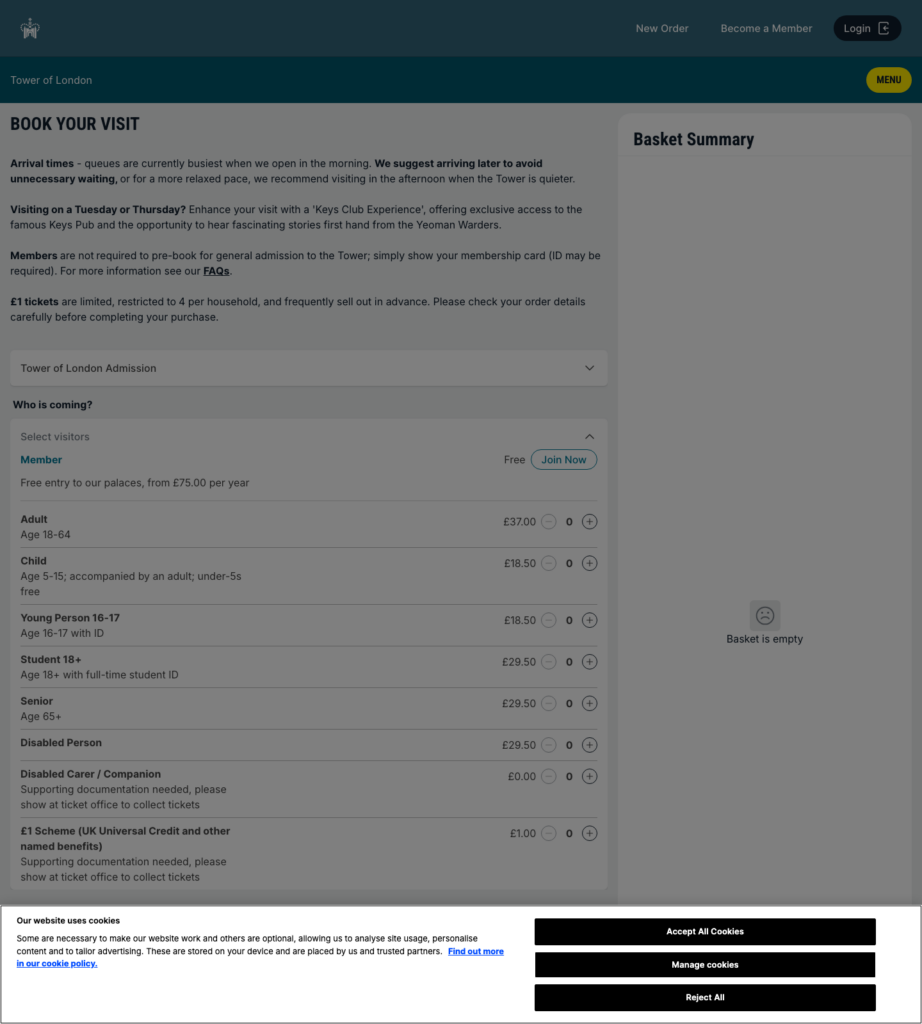
Tower of London general adult admission is currently £38 without donation, while St Paul’s standard adult sightseeing admission outside its summer offer is £27. Together that is £65 — exactly the current starting price of a two-choice Explorer Pass. On price alone it is a tie, so reservations, flexibility and the exact dated tickets decide the better option.
Tower plus London Eye: Explorer wins narrowly
Using the current Tower of London adult admission of £38 and the London Pass comparison value of up to £39 for the London Eye, the pair totals £77. Against a £65 two-choice Explorer Pass, the nominal saving is £12. That margin can disappear if your dated London Eye ticket is cheaper, so compare the real checkout prices rather than the highest advertised values.
Four paid attractions: Explorer has room to work
Tower of London £38, London Eye up to £39, City Cruises up to £25, and St Paul’s £27 total £129. The four-choice Explorer Pass is £115, a nominal £14 saving. More importantly, Explorer lets you spread those visits over the trip instead of forcing all four into one day.
Why the one-day All-Inclusive Pass often loses
A realistic heritage day might include the Tower (£38), St Paul’s (£27), and Tower Bridge (up to £18): £83 in headline individual prices against a £105 one-day pass. To cross the threshold, you need another paid inclusion. Doing four substantial attractions in one day is possible on a map and often unpleasant in practice.
All-Inclusive becomes more credible when a compact itinerary includes a cruise, short tour, evening activity, or food inclusion alongside two major sights. It is a poor fit when every attraction deserves two or three hours.
Reservations and timing can erase a paper saving
A pass does not guarantee that every attraction accepts walk-up entry at the moment you arrive. Popular sights can use timed slots or separate reservation steps, and seasonal attractions can have narrow operating windows. Check each attraction inside the official app before building the day. A £15 paper saving is not useful if the only available slot forces two unnecessary Tube crossings or leaves an awkward three-hour gap.
All-Inclusive days are consecutive calendar days, not 24-hour periods. Activating late in the afternoon still consumes that calendar day. Explorer is more forgiving because the remaining choices can be spread over 30 days after the first scan. That flexibility is often worth more than squeezing one additional low-priority inclusion into a packed day.
The free-museum trap
The British Museum, National Gallery, and Tate Modern do not need a London Pass for their general collections. Pass listings may include a tour, audio product, priority-entry package, guidebook, or paid exhibition connected to a free institution. That extra can be useful, but it is not the same as paying for museum admission.
Build the free backbone of the trip first. Add the paid palaces, monuments, tours, and exhibitions you genuinely want. Only then compare their total with the relevant pass. This prevents a pass from dictating the itinerary after purchase.
Families must calculate every traveler separately
Do not multiply the adult result by the number of people. Child ages and prices differ across attractions, some younger children enter free, and the pass uses its own child age band. A family can therefore reach a different verdict from two adults following the same itinerary.
Start with the official dated price for each adult and child. Add only the tickets each traveler genuinely needs, then compare those totals with the corresponding adult and child pass checkout prices. Concessions, student prices, accessible companion policies, and UK benefit schemes can make individual admission dramatically cheaper. A pass calculation that ignores eligibility is not conservative; it is wrong.
A better decision rule
- Write the paid attractions you would visit without a pass.
- Verify each one is included in the exact pass type.
- Check dated individual prices, not maximum “up to” values.
- Compare the total with the pass price available at checkout.
- Require a savings buffer of at least £10-£15 before accepting extra booking friction.
If the saving exists only because you added an attraction after seeing it in the pass, it is not a saving. It is additional spending with better branding.
When Explorer beats All-Inclusive
Explorer is usually the safer product for a first London trip built around a few famous paid sights. The four-choice example above starts at £115 and can be spread across the visit. The one-day All-Inclusive starts at £105, only £10 less, but requires enough paid activity inside one calendar day to justify itself. Paying slightly more for Explorer can produce a much better itinerary when the Tower, a cathedral, a cruise, and a view are the experiences you actually want.
All-Inclusive pulls ahead when the trip already contains dense clusters of shorter inclusions: a morning landmark, a nearby tour, transport or cruise, food inclusion, and an evening activity. It should not be used to manufacture that density. Write a plausible schedule with travel and meal time before running the price comparison. If the schedule looks exhausting without prices beside it, a discount does not repair it.
Also compare the exact product, not only the pass family. An attraction can be available on both passes, only on All-Inclusive, or represented by a specific add-on rather than standard entry. The cheapest-looking pass is irrelevant if it does not include the version you intend to use.
Bottom line
The best London museum strategy is usually free collections plus carefully chosen paid landmarks. Explorer is the cleaner pass for most visitors because it follows a shortlist and gives it breathing room. All-Inclusive is for dense sightseeing days, not museum days. If your arithmetic is close, buy individual tickets and keep control of the schedule.
For a broader European comparison, use our Museum Pass Europe guide. The underlying method is explained in our pass and bundle break-even framework.