
Last updated: November 20, 2026
Is conveyor-belt sushi worth it in Japan on a budget? Usually yes: at Sushiro Shinjuku East Exit (新宿東口店), five listed selections total ¥870–¥1,050, tax included (checked November 19, 2026). These are calculations using real menu prices, not a meal we personally bought; drinks, sides and availability can change the bill. A supermarket sushi box may save time, while a counter meal offers a different experience. Compare the entire meal, not just the cheapest plate.
This guide is a practical spending decision, not a ranking of restaurants. Prices vary by venue, branch, item and date. The menu prices below were checked against the official Sushiro Shinjuku East branch menu and Kura Sushi menu categories on November 19, 2026. They are real published menu figures for the stated location/category, not nationwide guarantees. The plate combinations are a budgeting exercise, not a meal we personally bought. Recheck the menu on your visit.
Choose the kind of sushi meal first
| Option | What you are paying for | When it makes sense | What to check |
|---|---|---|---|
| Supermarket or convenience-store sushi | Food you choose before paying, usually without restaurant seating or service | You have little time, want a predictable checkout total, or need to keep more of the day for sightseeing | Displayed total, portion size, available sides, where you are allowed to eat |
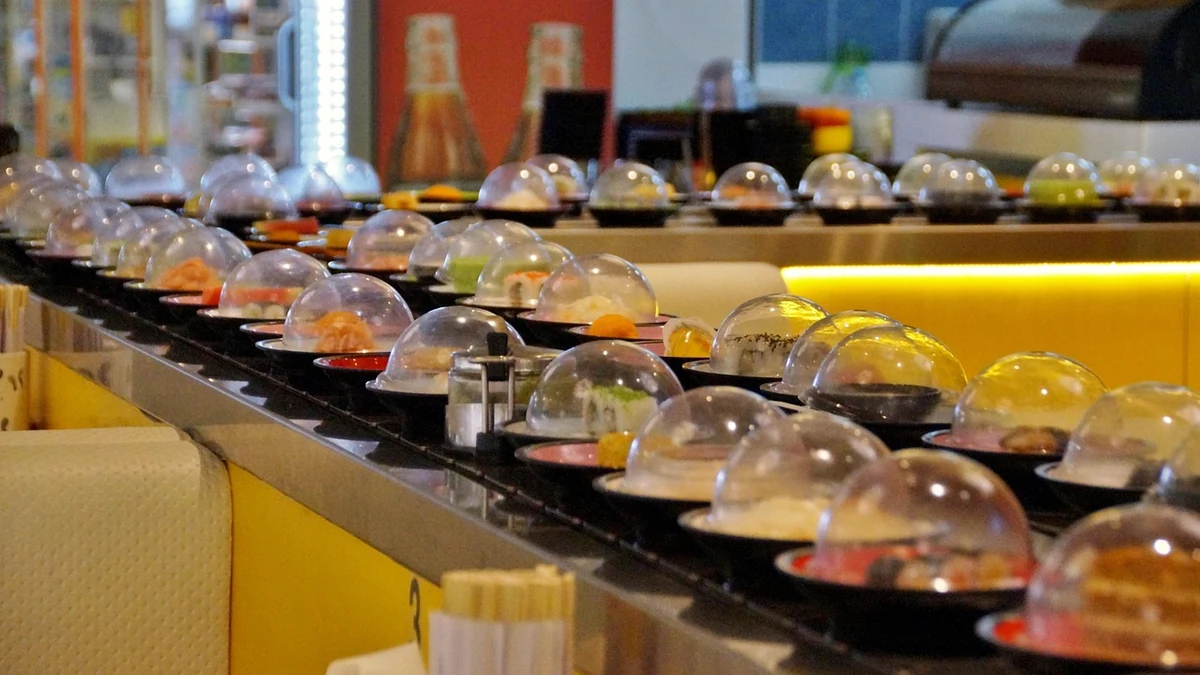
| Conveyor-belt sushi (kaitenzushi) | A meal assembled from individual plates or menu items | You want several kinds of sushi and can stop ordering at your own spending limit | The exact branch’s menu, different plate prices, sides, drinks, tax display |
| Sushi counter or set menu | A more deliberate seated dining experience, possibly a set or chef-selected sequence | The meal is a travel highlight rather than an interchangeable quick lunch | Posted set price, what’s included, extras, service terms and availability |
Japan’s national tourism organization lists kaitenzushi among accessible budget dining formats and also highlights supermarket bento meals for travelers watching costs. Its guide to sushi in Japan explains why the different dining formats are not interchangeable. None of that guarantees a particular price at your chosen restaurant.
A simple sushi-meal calculator you can use at the door
Set a per-person meal ceiling in yen. Before entering, check whether the displayed prices include tax and identify the individual plate or set prices—not just the lowest advertised plate. Then calculate:
Expected total = sum of the prices of the plates or set meals you will order + sides + drinks + any separately stated charges.
If a menu uses several price tiers, do not multiply all plates by the cheapest tier. Count each tier separately. A convenient shortcut is to set aside part of the budget for a drink or one extra item and use the balance as your sushi-only ceiling.
Real menu prices checked on November 19, 2026
These prices come from Sushiro’s official Shinjuku East menu. They are listed there with consumption tax included, and availability can change. Japanese product names are shown to make the items traceable in the original menu.
| Official Shinjuku East menu item | Displayed price, tax included | What it tells you |
|---|---|---|
| Salmon (サーモン) | ¥150 | A basic sushi selection at this branch. |
| Selected lean tuna (厳選まぐろ赤身) | ¥180 | A different price even in the same branch. |
| Salmon avocado (サーモンアボカド) | ¥210 | A higher-priced variation, not interchangeable with basic salmon. |
| Japanese scallop tasting (国産ほたて貝柱食べ比べ) | ¥390 | Premium choices can noticeably change a five-plate bill. |
Kura Sushi lists four starting-price categories for its restaurants: ¥110, ¥115, ¥125 and ¥145 per plate. In the ¥110 category, its official menu lists albacore tuna at ¥110 and salmon at ¥120. Those figures are specific to that store-price category, not guaranteed at every Kura branch. Check the category assigned to your location before budgeting.
Worked example 1: five real listed Sushiro selections
Suppose you choose two salmon items, two selected lean tuna items and one Japanese scallop tasting at the branch whose official menu is linked above. The published item prices give (2 × ¥150) + (2 × ¥180) + ¥390 = ¥1,050, tax included for those five listed selections. Replacing the ¥390 scallop with the listed ¥210 salmon avocado changes the modeled sum to ¥870. That difference is ¥180 without changing the count. This is a real-menu-price calculation, not a claim that we ordered, tasted, or photographed those dishes.
A ¥1,200 lunch ceiling would leave ¥150 after the first selection or ¥330 after the alternative, before optional extras. Availability, menu updates and any additional items change the real bill. Also check the number of sushi pieces in each menu item—five menu selections are not necessarily five identical-size portions.
Worked example 2: Sushiro’s ¥630 takeaway set vs eating in
The same Sushiro Shinjuku East menu lists an eight-variety takeaway set for one person (スシローお手頃セット8種・1人前) for ¥630, tax included. That is ¥420 less than the five-selection ¥1,050 dine-in model, but the products, portions and eating experience are different. Takeaway suitability, stock and current branch availability should be confirmed. It is not a verified supermarket price.
For a supermarket sushi box or a premium counter menu, no specific store/date price was independently established in this research. The honest comparison is to take the photographed shelf/menu price at your actual location and subtract it from the Sushiro or Kura total you can verify.
So, is it actually worth it?
Budget answer: the checked Sushiro branch lets you construct a varied five-selection example for ¥870–¥1,050 before optional extras, while an eight-variety takeaway set on the same published menu is ¥630. Experience answer: paying more can be reasonable if a seated meal, choosing each plate, trying premium seafood or taking a break with your travel companions is the point. A packaged meal may win if convenience and time matter more. Neither outcome proves better taste or quality without first-hand testing.
How to verify current prices without relying on an old travel blog
- Choose the location first. A chain name alone is not enough: menus, price tiers, availability and promotions can differ between branches.
- Open an official menu. For example, Sushiro’s official Shinjuku East branch menu is more useful for that branch than an old nationwide price claim. Kura Sushi publishes its official menu and location information separately.
- Price the meal, not one item. Write down how many plates you will probably eat and which items are outside the lowest price tier.
- Verify taxes and extras. Look for whether prices are tax-inclusive, and check drinks, sides, optional items and any other terms posted at the restaurant.
- Compare with what is actually available nearby. A convenient supermarket box can be worth more than a small theoretical price saving that requires an extra journey.
Official menus are starting points; the live in-store display is the final check. A page checked today may be out of date when you travel. The lesson is to verify the exact venue on the exact day, not to freeze a number into a timeless Japan travel guide.
Decision tree: which option fits this trip?
If you have under an hour and need a fixed total
Start by checking a supermarket or convenience-store option. You can inspect the package and price before committing. Also consider whether you have an appropriate place to eat; portability is not permission to eat anywhere. If you have dietary restrictions, verify actual ingredient and allergen information rather than assuming all sushi is the same.
If you want variety but need control
Try a conveyor-belt venue with a current menu you can check. Set a maximum plate count for each tier, leave room for additions and stop when you reach the ceiling. Japan’s tourism board describes conveyor-belt sushi as a distinct casual dining format; that format is why the plate-count calculation is useful.
If the meal itself is the occasion
Compare an advertised counter set or tasting option with your total day budget. Do not judge it by per-piece cost alone: you are choosing a different experience. Ask what the set includes and whether extra orders change the price. JNTO’s etiquette guidance is a good starting point for understanding the more formal setting, but the venue’s stated rules take precedence for your reservation and meal.
Three mistakes that make a sushi budget unreliable
- Using one chain-wide “plate price.” A low headline price might cover only a subset of dishes, and pricing varies. Model the actual mix you would order.
- Confusing cheap food with low total trip cost. An extra train trip or long wait may wipe out a small meal-price difference; time has a value even when it is not a yen expense.
- Assuming an old screenshot is a current offer. A restaurant menu or promotion can change; use official, location-specific pages and confirm the current display.
Frequently asked questions
Is conveyor-belt sushi automatically cheaper than supermarket sushi?
No. It gives you control over individual orders, but the total depends on the number and types of plates and any additional items. Compare the actual checkout price of the supermarket option with a modeled complete restaurant meal.
Should I pay more for one special sushi meal?
Only if it matches what you value. If the food is a central reason for visiting, treat the difference as a planned experience expense rather than a “budget failure.” If you mainly want a quick lunch, the convenient lower-total option may fit better.
How much should two people budget?
Make the calculation per person first and add the two totals; do not assume each traveler orders the same number or tier of plates. Build a small buffer for extras. Our Japan budget planner puts meals into the wider travel budget.
Where can I compare other cheap foods in Japan?
For ramen, set meals, convenience stores and other options beyond sushi, see our broader guide to eating well in Japan on a budget. This page deliberately covers only the sushi-specific choice.
Bottom line: sushi can fit a modest Japan food budget, but the smart choice is not a universally “cheapest” venue. Compare what you will really spend, the meal you want and the extra travel involved. Verify live, location-specific prices before ordering.
Editorial source check: November 19, 2026. Published Sushiro and Kura prices are identified by branch or store-price category. Calculated combinations are illustrative purchases using real listed prices, not restaurant visits. Menu offerings may change.