
Last updated: October 16, 2026
The best robot vacuum is not the one with the biggest suction number or the largest dock. It is the one that can handle your floors, thresholds and clutter, and finish the job without creating more maintenance than it saves.
Robot vacuum and mop systems now wash their own pads in hot water, dose detergent, lift or remove their mops and recognize objects with cameras, which makes them harder to compare. This is a research-based buying guide, not a lab test: we compare documented features and the conditions behind manufacturer claims. We have not tested the models mentioned. We use Roborock’s product pages as examples because they publish detailed footnotes, not because Roborock is our pick.
Start with your home, not a brand
Write down five facts before shopping: approximate floor area, the share of carpet and hard flooring, the tallest thresholds between rooms, the clearance under your furniture and whether cables or pet toys tend to end up on the floor. Add where the dock will go and whether there is a water connection nearby if you are considering a plumbed dock.
A small apartment with tile and no pets needs a different machine from a home with thick rugs, shedding animals and a low sofa. A robot that cannot fit under a key piece of furniture or get over your doorway is not an upgrade, whatever its advertised AI.
Eight things to compare before buying
1. Carpets and mops
Some robots lift a wet mop when they reach a rug; others leave the mops at the dock for vacuum-only runs. These approaches are not equivalent on thick rugs. Roborock, for example, says the Saros 10R can lift its mop pads up to 22 mm when the chassis is raised, and can drop its mops at the dock before vacuum-only or carpet-first jobs once that feature is switched on in the app. Measure your rug pile: if it is taller than the lift height, expect the pads to touch it. Then check how the robot detects carpet and whether the app supports no-mop zones; Roborock’s support pages explain its carpet avoidance modes.
2. Obstacle avoidance
Manufacturers describe structured light, 3D sensors, cameras and object recognition. Roborock says the Saros 10R and Saros Z70 recognize 108 types of objects and can avoid items as small as 2 cm wide and 2 cm tall; its footnotes add that these results come from internal testing and that accuracy varies with conditions. That is a claim to verify, not a promise that the robot will avoid a dark cable, a flattened sock or pet waste. Look for independent tests that show misses and performance in dim light.
3. Thresholds
A headline threshold figure is measured under specific conditions. Roborock’s Saros 20 page is a clear example: it advertises double-layer thresholds with a combined height of up to 3.46 inches (8.8 cm), but the footnote limits that to a first step of up to 1.77 inches (4.5 cm), a second step of up to 1.69 inches (4.3 cm) and a gap between them of 4.72 to 5.51 inches (12 to 14 cm). A single high lip, a rounded transition or two steps closer together are different problems. Measure and photograph your thresholds, then compare them with the stated conditions rather than the headline.
4. Mopping mechanism and edge reach
Rotating pads, vibrating flat pads and roller mops work differently. A robot whose mop extends sideways may reach closer to a skirting board and still miss a tight corner. Compare how much residue stays on textured tile, whether detergent is required and whether the mop leaves too much water on wood or laminate. Be wary of “deep cleaning” claims without test evidence.
5. The dock: washing, drying, emptying and refilling
A multifunction dock can rinse pads with hot water, dry them, empty the dustbin and dose detergent. Roborock lists 80°C mop washing and 55°C warm-air drying for the Saros 10R and Saros Z70, and washing at up to 100°C (212°F) for the newer Saros 20. These are manufacturer specifications for the dock’s washing cycle, not a hygiene certification for your floors. Check tank volumes, detergent compatibility, drying time and filter maintenance in the manual: even an automatic dock needs regular cleaning.
6. Suction ratings versus results
Pa figures come from the manufacturer’s own measurements. Roborock quotes 22,000 Pa for the Saros Z70, measured internally in its strongest mode with a full battery, and 36,000 Pa for the Saros 20. Neither figure proves pickup on rugs, in crevices or along walls, where brush design, sealing, airflow and navigation matter as much. Compare independent cleaning tests and, on delicate floors, the available power and water settings.
7. Consumables, spare parts and repair rights
Estimate a year of dust bags, filters, mop pads, brushes and detergent, and check that genuine replacements are sold in your country. Treat dock emptying intervals as best cases: Roborock says the Saros 10R’s dock can go up to 70 days without manual emptying, depending on use, which still means at least five bags a year. Ask whether the battery can be replaced and what a dock repair costs outside the warranty.
In the EU, the right-to-repair rules that apply from July 31, 2026 extend the legal guarantee by at least 12 months when you choose a repair instead of a replacement within the guarantee period, and require manufacturers of covered products to provide repair information and spare parts at a reasonable price. The manufacturer’s obligation to repair, however, only covers product groups with EU repairability requirements. Vacuum cleaners appear on that list through a 2013 ecodesign regulation that excludes robot and battery-powered vacuums, so do not assume a robot vacuum maker must repair your machine under these rules. Each EU country also has to write the rules into national law, so check your national consumer authority for details.
8. Software, privacy and security
Check the update record, data-deletion options, multi-floor maps, no-go zones and whether basic cleaning still works without the cloud. For camera-equipped robots, find out what happens to images. Roborock, for instance, says the Saros 10R stores no images and cites TÜV Rheinland certification and compliance with the ETSI EN 303 645 consumer IoT security standard; look for statements that specific rather than a generic “privacy first” badge. In the EU, internet-connected radio devices such as Wi-Fi robots have had to meet cybersecurity, data-protection and privacy requirements under the Radio Equipment Directive since August 2025; these obligations move to the Cyber Resilience Act from December 11, 2027.
The five-year ownership calculation
Compare the purchase price with supplies and likely maintenance. The following numbers are illustrative arithmetic, not prices for a real 2026 model:
- Machine A: €500 purchase + €75 a year in consumables × five years = €875 before repairs and electricity.
- Machine B: €700 purchase + €30 a year in consumables × five years = €850 before repairs and electricity.
In this simplified example, the more expensive robot costs less over five years. One dock failure outside the warranty can reverse the result, so ask the seller to price a battery, a brush kit and a dock repair before you buy, and do not assume every unit lasts five years.
Three real models: what the differences buy you
These three Roborock models illustrate different buying decisions using the official specifications already cited in this guide. This is a comparison within one brand, not a market-wide ranking. The household matches below are our interpretation of those specifications; we have not measured cleaning performance.
| Model | Documented difference | When to consider it | Important limit |
|---|---|---|---|
| Roborock Saros 10R | 7.98 cm body height; mop lift up to 22 mm with the chassis raised; automatic mop removal at the dock. | Low furniture and mixed hard floors and rugs, where leaving wet pads behind for vacuuming is useful. | Auto-removal must be enabled in the app. The lift figure alone does not guarantee clearance over thick rugs; check furniture clearance too. |
| Roborock Saros Z70 | A mechanical arm can relocate supported objects; the listed types are socks, sandals, crumpled tissues and towels under 300 g. | Homes where those particular lightweight items often block cleaning, provided the arm’s added function justifies the local price difference. | The arm is disabled by default and needs app setup. Its supported object list and 300 g weight limit make it unsuitable as a general clutter-clearing solution; performance depends on software and surroundings. |
| Roborock Saros 20 | Claimed crossing of single thresholds up to 4.5 cm, or double thresholds totaling up to 8.8 cm under the specified test conditions. | Homes where a difficult doorway would otherwise leave a room uncleaned. | The 8.8 cm claim requires steps no higher than 4.5 cm and 4.3 cm, with a gap greater than 12 cm and no more than 14 cm. It does not describe an 8.8 cm single step; verify the actual doorway. |
Choose the feature that solves a measured problem in your home, then compare the delivered price, local availability and exact dock bundle. These specifications do not establish which model removes more dirt or offers the best value.
Three home profiles, three priorities
Hard floors, mostly clear rooms
Prioritize reliable mapping, cleanable pads and a dock that fits the space. Paying much more for complex threshold mechanics or a pet-recognition camera may add little. A competent mid-range vacuum and mop is often enough.
Mixed tile and thick rugs
Put carpet handling and mop management ahead of the highest washing temperature. A robot that leaves its mops at the dock may suit you better than one that lifts them a short distance, but confirm your rug pile height and room layout.
Pets, cables and clutter
Obstacle avoidance, brush tangling and easy dustbin maintenance matter most. A robot is not pet-safe because its product page lists many recognizable objects. Read independent avoidance tests, watch how the robot behaves in dim light and keep hazards off the floor when you can.
A seller checklist you can use
- Exact model, local warranty, seller location and return period.
- Dock dimensions, including the lid opening and access to the water tanks.
- Furniture clearance, threshold shape and height, rug pile height.
- Carpet mode: lift, avoid, cross, or leave the mops at the dock.
- Price of replacement parts, and whether the battery can be replaced.
- Camera and cloud settings, update policy and what works offline.
- Dock cleaning tasks you will still do each week.
- The delivered price for the same dock and accessory bundle.
If a retailer advertises a large seasonal reduction, check the model’s 90-day price history and the delivered total rather than trusting the crossed-out reference price.
Frequently asked questions
Is 20,000 Pa always better than 10,000 Pa?
No. Manufacturers measure suction themselves, and no single number predicts how well a robot cleans a whole floor. Compare independent pickup, edge and carpet tests run under similar conditions.
Does hot-water dock washing mean the floor is sanitized?
No. The temperature claim describes how the dock washes the mop pads, not a disinfection test of your floors.
Will every robot mop avoid carpets?
No. Behavior differs by model and mode: some lift the pads, some avoid carpets, some cross without mopping and some leave the pads at the dock. Check the exact behavior for the model you are considering.
Does the EU right to repair cover robot vacuums?
Partly. The longer legal guarantee after a repair under warranty applies to consumer goods in general, but the manufacturer’s obligation to repair is tied to EU ecodesign repairability rules, and the current vacuum cleaner rules exclude robot vacuums.
Should I buy during Black Friday?
Only if a specific model and dock bundle fits your home and its delivered price beats its own recent price history. A discount cannot fix a doorway or carpet mismatch.
How we checked this
Checked on October 11, 2026 against Roborock’s official pages for the Saros 10R, Saros Z70 and Saros 20, including their footnotes, the European Commission’s right-to-repair announcement, the EU ecodesign regulation for vacuum cleaners and the Commission’s Radio Equipment Directive page. We did not test any robot vacuum for this guide. The three-model comparison was checked against the linked manufacturer pages on October 12, 2026.
Related reading: For the broader smart-home ecosystem around connected appliances, see checking Matter, Thread and Zigbee compatibility.
Once you have chosen a vacuum model, compare its advertised sale price against real price history using our Black Friday discount-checking guide.
Sources
- Roborock — Saros 10R product page and footnotes (manufacturer claims)
- Roborock — Saros Z70 product page and footnotes (manufacturer claims)
- Roborock — Saros 20 product page and threshold test conditions (manufacturer claims)
- Roborock Support — carpet avoidance modes
- European Commission — Right to repair: new consumer rights (July 31, 2026)
- EUR-Lex — Directive (EU) 2024/1799 on the repair of goods
- EUR-Lex — Regulation (EU) No 666/2013, ecodesign requirements for vacuum cleaners
- European Commission — Radio Equipment Directive and cybersecurity requirements
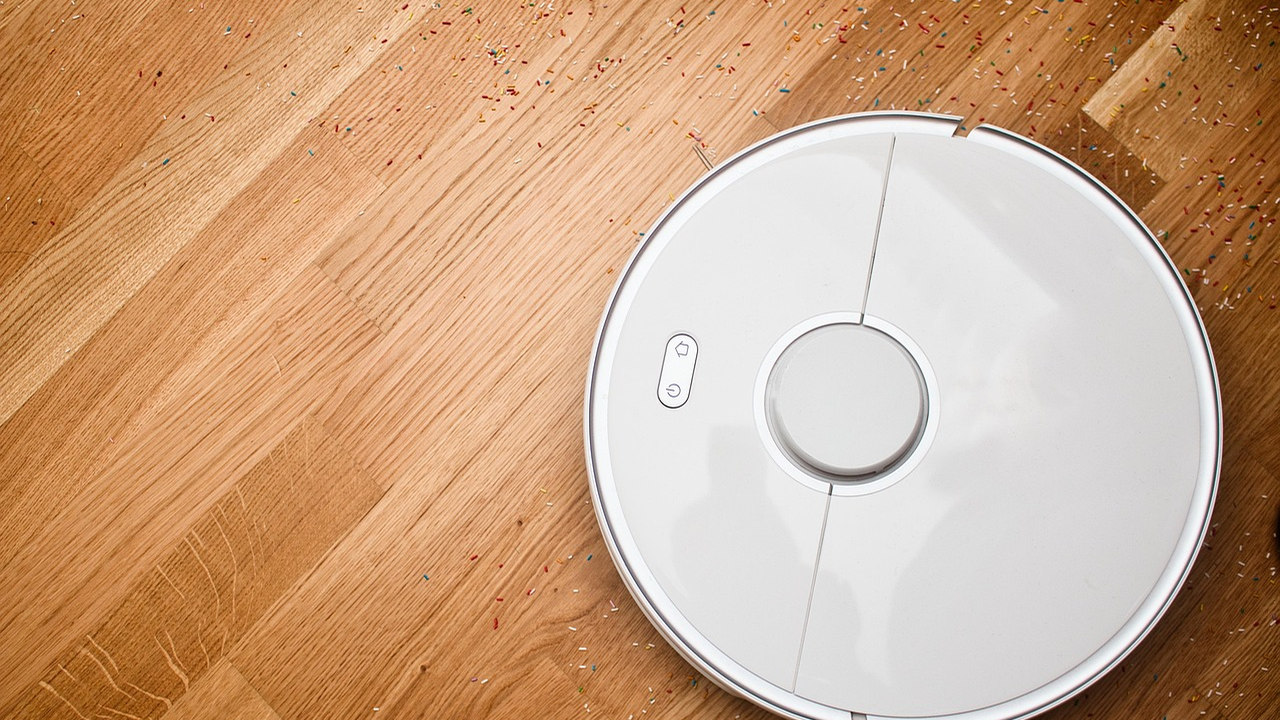
Featured photograph: Pixabay photo by HOCKULUS, used under the Pixabay Content License. Illustrative photograph of a robot vacuum; the unit pictured is not a tested or recommended 2026 vacuum-and-mop model.