
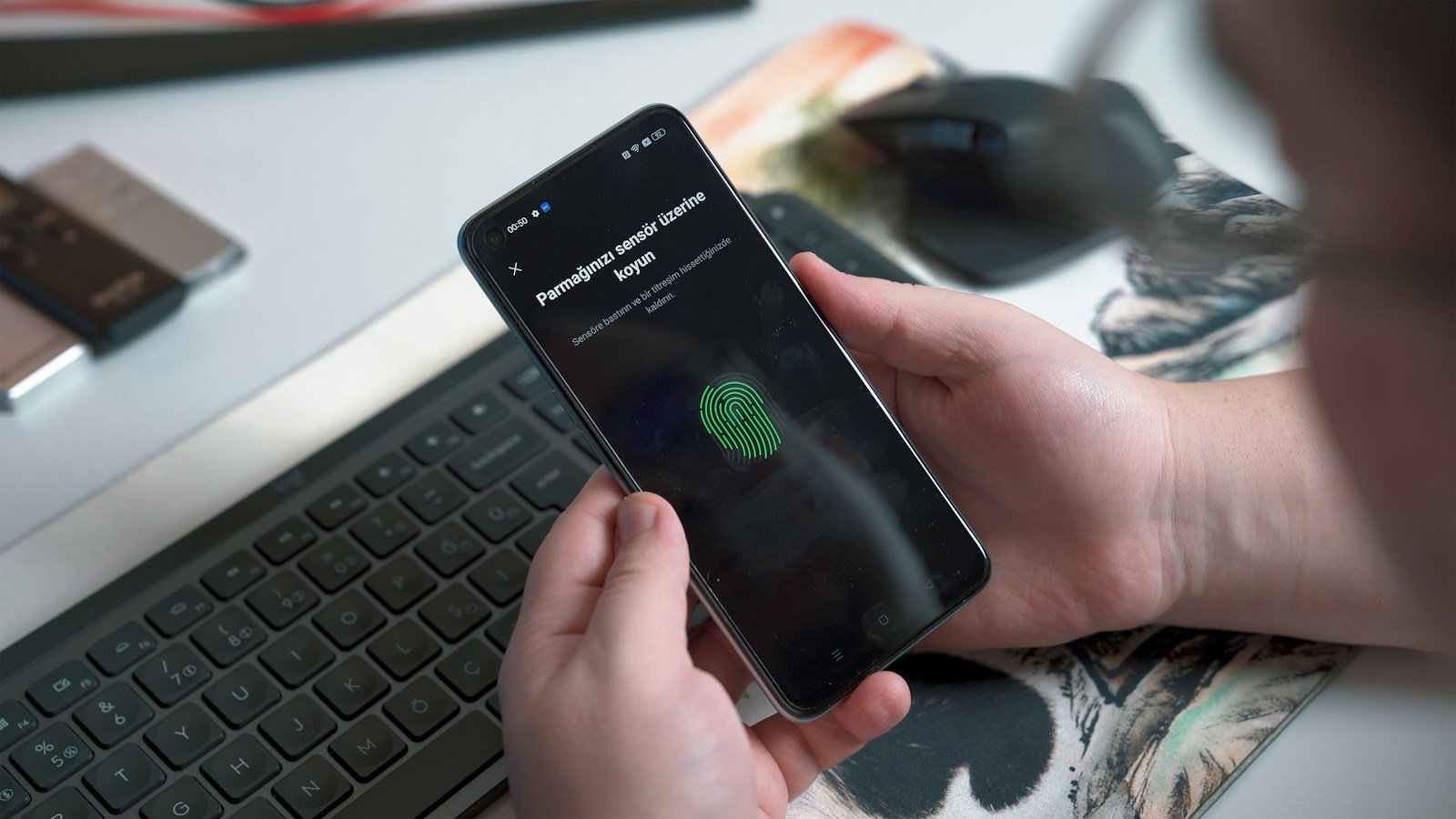
Can you download a European Digital Identity Wallet today? That depends on what you mean by “wallet”. Some countries already have government apps for digital identity cards, licences or age checks. A certified, interoperable EUDI Wallet is a separate milestone. The EU framework targets national availability by the end of 2026, but governments are at different stages. This evidence-first guide helps you check your own country without mistaking an ordinary national app or a pilot for EU-wide certification.
Research checked: 29 October 2026. This is a dated editorial snapshot, not a live government registry or legal advice. Country-specific evidence was independently located for eight Member States; the remaining entries are deliberately marked as unverified rather than given invented release dates. Always follow the national issuing authority before installing an identity app.
The answer in 45 seconds
- Deadline: under the amended eIDAS framework and implementing rules, EU Member States are expected to provide at least one EU Digital Identity Wallet by the end of 2026. This is a legal obligation/target, not evidence that every country has already delivered.
- What exists now: Italy’s Documents on IO/IT-Wallet, Denmark’s AltID, France Identité and several other national credential apps already have real users. National availability does not certify cross-border EUDI status.
- Known exception to the 2026 aspiration: the German federal government expressly targets an initial early-2027 wallet release. A government roadmap is not an app-store launch.
- Cost: issuing, using and revoking an EUDI Wallet must be free to all natural persons. Qualified electronic signing is free by default for natural persons, although Member States may proportionately limit free signing to non-professional purposes. Professional signing services and unrelated certificates are not necessarily free.
- What happens in 2027: the regulation phases in wallet acceptance duties for defined public and private services. The private-party strong-authentication rule exempts microenterprises and small enterprises, and applies upon the user’s voluntary request. It does not mean every website must accept a wallet on one universal date.
European Commission: Digital Identity · Official EUDI FAQs · ENISA: Wallet certification work
EU Digital Identity Wallet: check the evidence for your country
The tool below lists all 27 EU Member States. For each, it shows either an independently confirmed national credential service, an official government release target or an explicit “not independently verified” notice. The underlying sources come from official government domains. The tool does not infer certified EUDI status from a national app, public pilot, marketing page or private-sector readiness score.
EU-27 · Primary-source evidence · Reviewed 29 October 2026
EU Wallet Country Explorer
Choose your country to see what we could verify from official sources. A national app is not the same thing as a certified European Digital Identity Wallet. “Not independently verified” does not mean “no wallet”.
Choose a country to read the evidence.
Certification rule: this tool does not declare any country to have a certified EUDI Wallet without an independently checked official notification under eIDAS Article 5d. We have not verified a complete EU register as of this review. The statuses are editorial research snapshots, not live government feeds.
EU framework: European Commission · ENISA certification work. No form submission, account or identity data is required.
What does “available” actually mean?
| Label | What the evidence proves | What it does not prove |
|---|---|---|
| National digital ID app | A government-issued digital identity or document feature is accessible to eligible domestic users. | That the app can verify attributes abroad, perform every EUDI function or has formal EU wallet certification. |
| Sandbox / pilot | Limited testers or developers are trying a technical implementation. | That ordinary citizens can download a fully functional production EUDI wallet. |
| Government launch target | An issuing authority announced a date or timeframe. | That the app is already live, or the target cannot change. |
| Certified EUDI Wallet | An EU Member State reports certification under the specific eIDAS/EUDI regime and the appropriate official listing/notification exists. | That every relying party or every document issuer already supports every use case. |
| Unverified | Our October 2026 review does not contain sufficient national primary evidence for a reliable statement. | That the country has no project, no app, or is non-compliant. |
The legal standard matters because Article 5d of the amended eIDAS Regulation provides for a Commission-maintained list of certified EU Digital Identity Wallets. An app’s presence in a phone store is not a substitute for that listing. In February 2026, ENISA signed a two-year Contribution Agreement with the European Commission to support national wallet certification schemes, as confirmed in its 3 April 2026 announcement.
Eight national case studies: seven existing apps and one launch plan
These national services are useful in daily life. Their purpose, supported documents, legal scope and eligibility differ. The list is an evidence sample, not a ranking or a complete EU launch table.
| Country | What the government confirms | Scope / restriction |
|---|---|---|
| Italy | IT-Wallet / Documents on IO offers verified digital credentials, with driving licence, health card and disability card introduced in the first phase. | Specific domestic uses; not proof that every credential is accepted throughout the EU. |
| Denmark | AltID provides proof of age and a photo ID card. | The government’s own page says the present use is domestic and AltID does not replace MitID. |
| France | France Identité provides official mobile identity and documents, subject to supported ID cards and phone requirements. | A notified national digital identity does not automatically establish an EUDI-certified wallet. |
| Germany | d-you / government EUDI wallet has an official early-January 2027 launch target, according to the German Federal Government. | A planned release, not a current full EUDI wallet citizens can download. |
| Greece | Gov.gr Wallet includes digital identity, licence and other documents. | Government explicitly describes domestic validity; do not infer a replacement for international travel documents. |
| Poland | mObywatel provides national documents and official services. | Its domestic mDowód document is not an international travel ID. |
| Portugal | gov.pt app carries national digital documents and digital authentication. | Government advises carrying physical documents when travelling abroad. |
| Austria | ID Austria and eAusweise provide official online identification and digital document display; the Austrian government lists both apps. | Do not infer that the eAusweise app is a certified EU wallet. |
Italy explained: SPID vs CIE vs IT-Wallet vs EUDI Wallet
Italy is an important test case, because one person may have four different names for identity technologies on their phone or computer — and they are not interchangeable.
| System | Main job | Important distinction |
|---|---|---|
| SPID | Authentication to compatible online public or private services through accredited identity providers. | SPID credentials are not, by themselves, an interoperable document wallet. |
| CIE / CieID | State-issued identity card and an electronic identification/access method. | The Ministry of the Interior documents several access levels and NFC use for high-assurance checks; it is not the same as an EUDI wallet app. |
| IT-Wallet on IO | A domestic government smartphone wallet holding verified documents such as driving licence and health card, within the supported use cases. | Domestic digital copies do not automatically replace the physical passport or constitute certified EUDI cross-border credentials. |
| Future EUDI Wallet | EU-standard interoperable identification, attribute sharing and electronic signing under the harmonised regulatory framework. | Certification and supported cross-border services must be verified at the time of use. |
For Italian residents, the practical step today is to use the official Documents on IO guidance or AgID’s IT-Wallet page; for CIE use the Ministry of Interior’s CIE guide. Do not download an unknown “European Wallet” app from a sponsored search result just because it mentions December 2026.
The two deadlines are not the same thing
The European Digital Identity framework, amended by Regulation (EU) 2024/1183, requires national provision of the wallet within a defined period after implementing acts on core functions and certification. The Commission describes this as by the end of 2026; implementation dates may still vary in practice. An official government example is Germany, which targets a first app in early 2027. That discrepancy is worth reporting — without treating a forecast as a legal extension or proof of regulatory breach.
Public authorities have separate requirements to accept qualifying wallets for relevant electronic identification. Certain private relying parties for which strong user authentication for online identification is legally or contractually required are also subject to wallet acceptance duties under Article 5f. Microenterprises and small enterprises are expressly exempted from this private-party obligation, and acceptance is required only on the user’s voluntary request. The deadline is tied to the implementing acts and falls in a 2027 phase, not a blanket rule for every business or website.
Official European Commission FAQ · Implementing regulations · Germany’s official target.
Are EUDI Wallet signatures really free?
The EUDI framework offers free qualified electronic signing by default to natural persons, while allowing Member States to limit free signing proportionately to non-professional purposes. A qualified electronic signature has the same legal effect as a handwritten signature in the EU. That is a significant change from situations where individuals have needed a separate paid signing service for certain documents.
However, “free digital signature” does not mean every electronic-signature product or certificate becomes free, that professional or business use is automatically covered, or that today’s national wallet already offers this feature. The regulation distinguishes free wallet issuance, use and revocation for natural persons from conditions that may apply to professional signing and third-party attestations. Verify the issuing trust service provider, wallet capabilities, certificate requirements and use case before relying on it for a contract. EU trust-services Q&A.
Privacy: what data could the wallet share?
A central design principle is selective disclosure: when a merchant needs to know if you are over an age threshold, the idea is to prove the attribute without always revealing your full date of birth, home address or national identification number. A secure wallet should show which requesting party wants what, so the user can consent to the permitted disclosure. The regulation also includes security requirements, auditability and protections against unauthorised access.
These are requirements and design goals, not a promise that every deployed national app already supports identical privacy controls. Real-world privacy depends on issuer implementations, relying-party requests, credential formats, security of the smartphone and other factors. The European Commission explains the framework’s user control and data minimisation principles in its official Q&A.
What happens if you lose your phone?
Loss of a smartphone should not be treated as proof that identity credentials were stolen. But the safe response is to act as if the device is at risk until it is secured. First, use the phone operating system’s official lost-device controls to lock the device and protect its account. Then follow the specific wallet issuer’s published guidance for suspension, recovery, revocation or reissuance. Do not assume deleting an app from another device revokes all previously issued attestations. If you suspect misuse, contact the appropriate national authority and any affected service providers.
Never enter a wallet’s activation secrets, passwords or identity documents into an unofficial “recover your EU identity” page. Because procedures vary by country, we deliberately do not provide an invented universal recovery button or a single pan-European emergency number.
Three scenarios that explain the real value
- An Italian proving her age in Denmark: today a domestic Italian credential might not be accepted by the foreign merchant. The EUDI design aims for interoperable proof of an age attribute. But interoperability is not guaranteed until the relevant issuer, wallet and Danish verifier are supported and certified where required.
- A German opening a bank account from home: the government says its first d-you app is planned for early 2027. The wallet may simplify identity verification once the bank integrates it; a launch announcement is not proof that all German banks already accept it.
- A Polish citizen signing a personal agreement abroad: the planned EUDI framework supports qualified electronic signatures free for non-professional use. The actual signing availability depends on a supported certified wallet and trust service at the time of signing; it does not make every existing Polish mObywatel feature legally interchangeable with EUDI.
How to spot an official wallet
- Start from a national government or official public-service page linked by the actual issuing authority, not an advertisement or app-store search alone.
- Check the exact publisher name, supported devices, national eligibility, cost and documents. Do not assume every “digital ID” app is government-issued.
- Look for the relevant national certification/notification and the Article 5d list once an official certified-wallet entry is available.
- Ask whether the service works domestically, across borders or only in a pilot. Do not use national-only identity screenshots in place of a passport or driving licence without official permission.
- If an app requests money simply to “unlock your free European ID Wallet”, stop and check the government’s genuine guidance.
How we researched the country table (and what remains unverified)
Our editorial method is intentionally conservative. We recorded 27 EU Member States, but researched eight national case studies in depth (seven national services and one government launch plan), separated verified national credential services from verified official launch targets, and attached direct government source links to every positive claim. For countries where our current edition lacks sufficient national primary evidence, we display “not independently verified”, not “not started”, “late” or “certified”. A commercially operated tracker is useful for discovering potential leads but is not authoritative evidence of EU certification.
The status is not an automated live feed and should not be used for regulatory compliance. The next meaningful update would need to check each national issuing authority and the official EU certification notifications again, recording the source date and changed claim. This guide does not collect visitor identity information and the country selector operates locally in the browser.
National government sources reviewed: Italy — AgID; Denmark — AltID; France — France Identité; Germany — Federal EUDI Wallet; Greece — Gov.gr; Poland — mObywatel; Portugal — gov.pt; Austria — oesterreich.gv.at.
EU sources reviewed: European Commission overview; European Digital Identity Regulation; EU trust services and signatures; ENISA.
Editorial review: 29 October 2026. This article must be rechecked before any future change to a country’s launch, certification or acceptance status. If you see a government source that contradicts our edition, contact Heresthebest through our contact page; substantive corrections should be noted openly.